July 31, 2026
What happens when local humanitarian leaders are equipped with the right training—and then immediately put those skills into practice?
Allen Chimombe, Capacity Development Specialist, Baptist World Aid
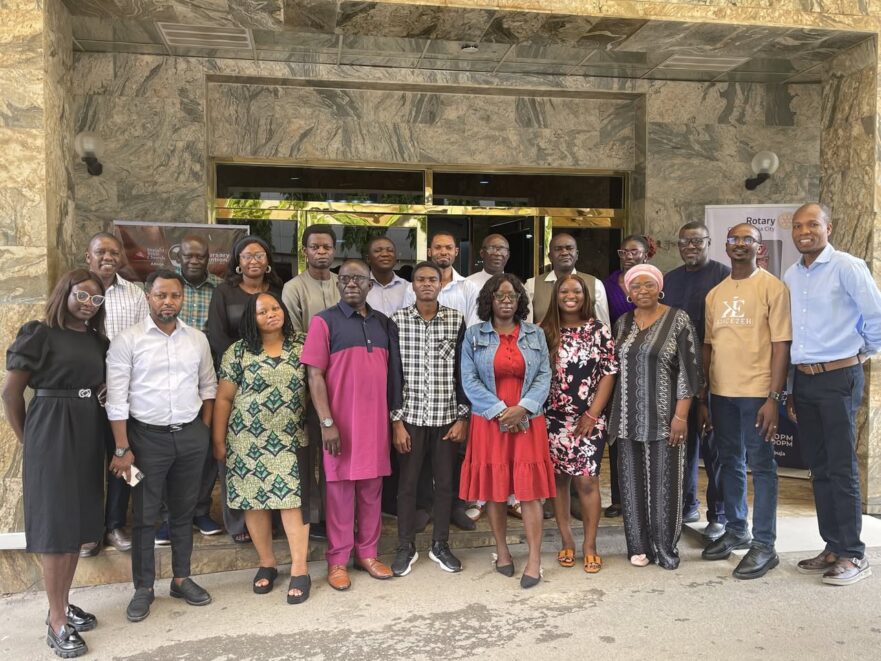
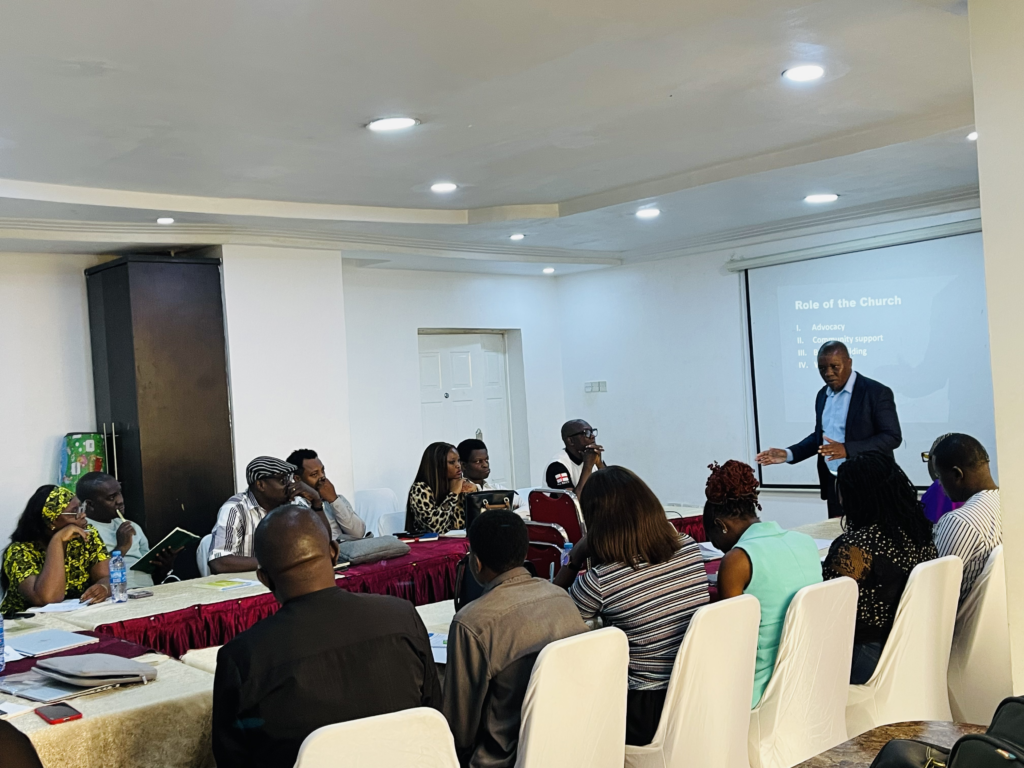
Recently, with funding support from Freedom House, 21Wilberforce partnered with Baptist World Aid to strengthen the humanitarian capacity of six Nigerian Christian nonprofit organizations serving communities affected by violence and displacement. Through intensive training based on internationally recognized Sphere standards, participants explored practical approaches to delivering humanitarian assistance that is ethical, accountable, and responsive to the needs of vulnerable families.
The training was quickly put into action. The Freedom House grant further allowed 21Wilberforce to partner with one of the participating organizations, Rev. Akinyele Abiodun James and the Nigerian Evangelical Fellowship (NEF), to launch the first phase of an emergency humanitarian intervention in Miango Community, located in Bassa Local Government Area of Plateau State. This is one of northern Nigeria’s regions that has experienced repeated attacks on rural Christian communities. Years of violence have claimed lives, destroyed homes and farms, displaced families, and left many struggling to meet even their most basic needs.
Working closely with local church leaders, community representatives, and volunteers, NEF conducted field assessments to identify the households facing the greatest hardship. Particular attention was given to widows, elderly persons, people living with disabilities, female-headed households, and families caring for young children.
The effort assisted 70 vulnerable households, providing emergency food assistance alongside essential household supplies.
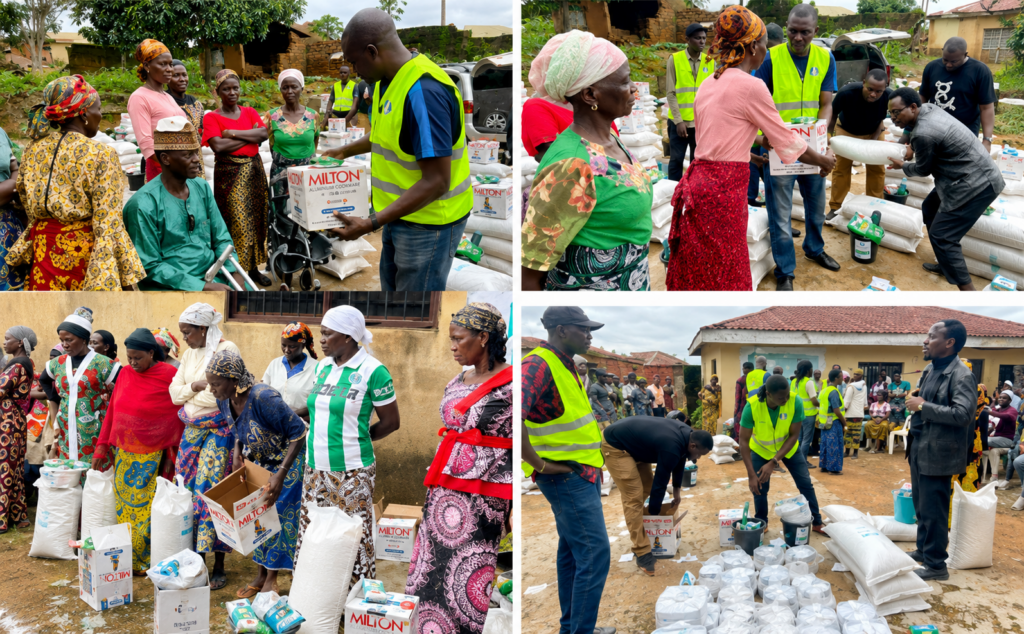
Distribution of food and non-food items to verified beneficiary households. Photo credit: Nigeria Evangelical Fellowship
Families received staples such as maize, rice, beans, vegetable oil, and seasoning, together with practical items including cooking utensils, buckets, hygiene supplies, laundry detergent, bathing soap, and menstrual hygiene materials for women and adolescent girls. These items not only helped address immediate needs but also restored dignity to families rebuilding their lives after repeated displacement.
For many recipients, the assistance arrived at precisely the right moment.
Mrs. Amos Ruth, a widow in her sixties, has endured years of hardship following repeated attacks in Miango. After violence forced her family to flee, she eventually became responsible not only for her own children but also for four of her sister’s children. Her eldest son also sustained life-changing injuries during one of the attacks, leaving him permanently disabled. Providing food and school fees for such a large household had become an overwhelming burden.
Following the distribution, she shared:
“I don’t have enough words to express my gratitude. The support came at exactly the right time. The night before, I was wondering how I would feed all these children. This assistance was like manna from heaven. I pray that God will continue to bless everyone who made it possible.”
Community leaders also emphasized the significance of the intervention.
Mr. Francis Otu, a local community leader, noted:
“This intervention has gone a long way in helping displaced families and those who are suffering in our communities. We are truly grateful for this support. We pray that God will continue to bless everyone behind this intervention, strengthen them, and enable them to keep helping people in need.”
For 21Wilberforce, this initiative reflects an important principle of our humanitarian work. We believe lasting impact comes not only from providing emergency assistance, but also from strengthening trusted local organizations that are already serving vulnerable communities. By investing in local capacity, we help equip leaders to respond effectively, transparently, and compassionately when crisis strikes.
The humanitarian consultation in Abuja and the subsequent aid distribution in Plateau State demonstrate what is possible when local Christian organizations receive both practical training and the resources needed to serve their communities.
A three-minute video below captures highlights from both the humanitarian consultation in Abuja and the aid distribution that followed. It offers a glimpse of local leaders learning together, preparing to serve their communities, and walking alongside families whose lives have been disrupted by conflict.
This emergency intervention represents only the first phase of a broader humanitarian response designed to assist violence-affected Christian communities in Plateau, Kaduna, and Niger States. We look forward to sharing more about this work—and the courageous local partners leading it—in the months ahead.Leaders like Rev. James are serving families in Nigeria who have been displaced by violence, and they are ready to do more with the right training and support.
Support leaders like Rev. James
Photo and video credit: Iyan