

July 2, 2026
A Baptist pastor, peacebuilder, and advocate for religious freedom, Rev. John Joseph Hayab has spent more than two decades helping communities across northern Nigeria choose dialogue over division. Growing up between a traditional village and a military barracks in northern Nigeria, Hayab learned early on how unresolved conflicts can fracture sacred relationships—and how people from different backgrounds can live together in harmony.
Those early experiences planted a conviction that would shape a lifetime devoted to protecting religious freedom, building trust across deeply divided communities, and reminding others of their common humanity.
Today Rev. Hayab works where faith, conflict, and public life intersect. As a Baptist pastor, development practitioner, peacebuilder, and Christian leader, he has become one of northern Nigeria’s most respected voices.
His work routinely places him in difficult spaces—between grieving families, across religious divides, and alongside government officials working to defuse violence before it erupts. Whether meeting with Christian and Muslim leaders after a crisis, mentoring young peacebuilders, or speaking for vulnerable communities, Hayab consistently demonstrates that defending religious freedom and pursuing peace are not competing missions. For him, they are inseparable expressions of Christian faith.
“I love to see people making positive use of religion for the development of mankind and their spiritual growth. Religion must not be used to cause pain or destruction. Instead, religion should help us appreciate and celebrate our common humanity under God.”
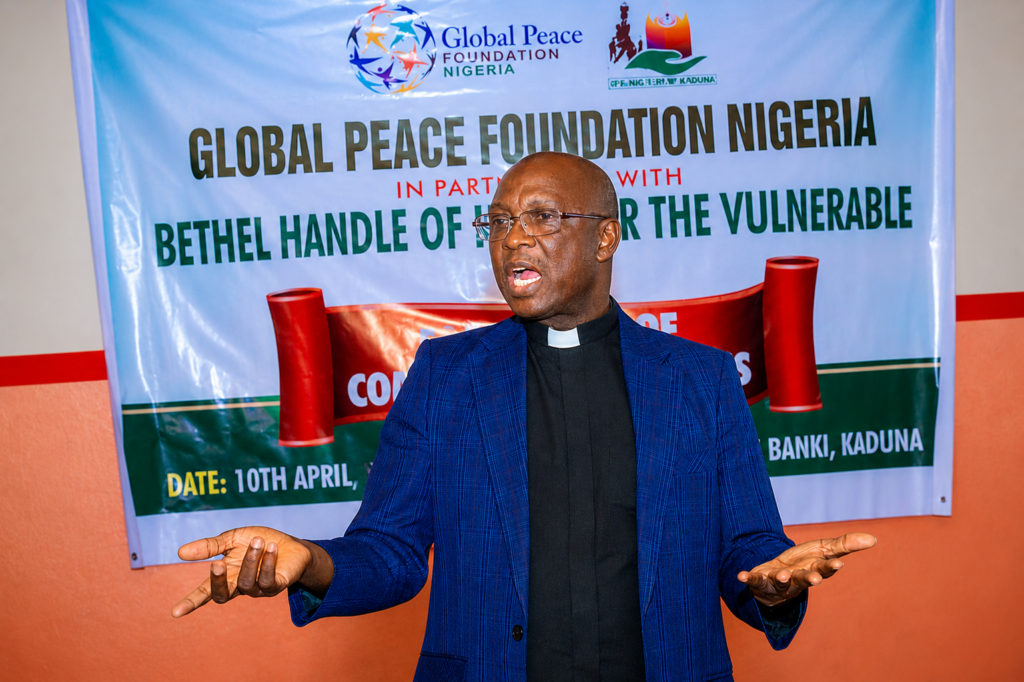
Rev Hayab Global Peace Foundation Nigeria
Currently, Rev. Hayab is the field Representative of Global Peace Foundation Nigeria and he serves as the CEO of the Christian Awareness Initiative of Nigeria (CHAIN). He also serves as Chairman Northern Christian Association (NCA) for the 19 Northern States and the FCT. Previously, he served as Special Adviser on Religious Matters to the Governor of Kaduna State. Throughout these roles, his conviction remains unchanged: that every person possesses God-given dignity and deserves protection and respect.
Formed by Two Worlds
Hayab’s perspective was shaped long before he entered formal ministry. In his childhood village, he witnessed the value of mutual dependence and how traditions shape identity. In the military barracks, he experienced diversity firsthand. Living alongside various ethnic and religious groups proved to him that peaceful coexistence is achievable when mutual respect, discipline, and shared purpose prevail.
His subsequent theological education at the Baptist Theological Seminary in Kaduna formalized his pastoral calling, while peacebuilding studies at American University in Washington, D.C., expanded his understanding of conflict transformation. Yet it was not the classroom that ultimately defined his trajectory. It was the violence that engulfed his home state.
When Ministry Moved Beyond the Pulpit
Northern Nigeria has endured repeated outbreaks of communal violence where religious identity, politics, poverty, and misinformation collide.
Hayab did not observe those tragedies from afar; he lived through them.
“When I say I speak as a victim, it is not rhetoric—it is reality. During the 2000 and 2002 crises in Kaduna, I witnessed destruction that no human being should ever see. One moment that remains etched in my memory is seeing innocent lives lost simply because of their identity. That experience broke something in me, but it also birthed something stronger—a resolve that such violence must not continue unchecked.”
Those painful experiences transformed his understanding of ministry. Preaching from the pulpit was no longer enough. If people were being displaced, traumatized, and killed, Hayab realized the Church had an active responsibility to engage in reconciliation, advocate for justice, and help prevent future violence.
Choosing peace in the face of profound personal loss was not an act of weakness. As he explains, “it was a deliberate and costly decision” that continues to dictate his daily ministry.
Building Trust Across Religious Divides
There is rarely an ordinary workday for Rev. Hayab. On any given day, he might mediate between opposing religious leaders, respond to rumors before they escalate, or meet with government officials, community leaders, security agencies, or victims of conflict. Three unyielding principles guide his leadership: sincerity, consistency, and fairness. He believes people only move toward solutions when they feel genuinely heard and see that justice is being pursued equally for all communities.
His long-standing relationships with Muslim leaders across northern Nigeria, including respected Islamic clerics with whom he has partnered for many years, have challenged stereotypes on both sides. While some Christians view all Muslims through the lens of extremism, many Muslims conversely assume Christians are inherently hostile. Hayab believes these misconceptions begin to disappear when people encounter one another as neighbors rather than adversaries.
“When people meet, talk, and share experiences,” he notes, “fear begins to fade.”
Peace Is Built One Conversation at a Time
At CHAIN, dialogue is a practical strategy for protecting lives. The organization regularly convenes religious and youth leaders, traditional rulers, victims of violence, security agencies, government officials, and community representatives to address local tensions before they erupt into crises. Hayab notes that a remarkable transformation occurs around the dialogue table: individuals who arrive trapped in an “us versus them” mindset frequently leave viewing one another as partners working toward the same goal—a peaceful and flourishing community.
Some of CHAIN’s greatest successes never appear in newspaper headlines precisely because violence that is prevented is rarely deemed newsworthy. Quiet interventions by trusted religious and community leaders have diffused countless rumors, preventing immeasurable suffering across northern states in Nigeria.
However, this work brings distinct challenges. Over the years, Hayab has faced criticism and even threats, including from some within his own Christian community who mistake peacebuilding with compromise. He views the matter differently, rooting his work in biblical truth that every individual is made in the image of God and holds inherent dignity.
For Hayab, peacebuilding is not separate from his faith; it is an expression of it. This is the heart of his frequent refrain: “one family under God.“
Defeating Misinformation Through Truth
Hayab cautions outside observers against simplistic explanations that label Nigeria’s conflicts as purely religious. While religion is frequently weaponized as a tool, the underlying drivers are rooted in poverty, weak institutional governance, political manipulation, and misinformation.
To combat this, Hayab emphasizes that accurate documentation is essential to protecting vulnerable communities.
That imperative has led CHAIN to partner with organizations like 21Wilberforce to document religious freedom violations and incidents of communal violence.
Responsible documentation gives victims a voice, equips policymakers with verified data that promotes accountability, and it challenges false narratives before they trigger retaliatory violence. Silence allows misinformation to flourish; truthful documentation forces national and international leaders to develop informed, just responses.
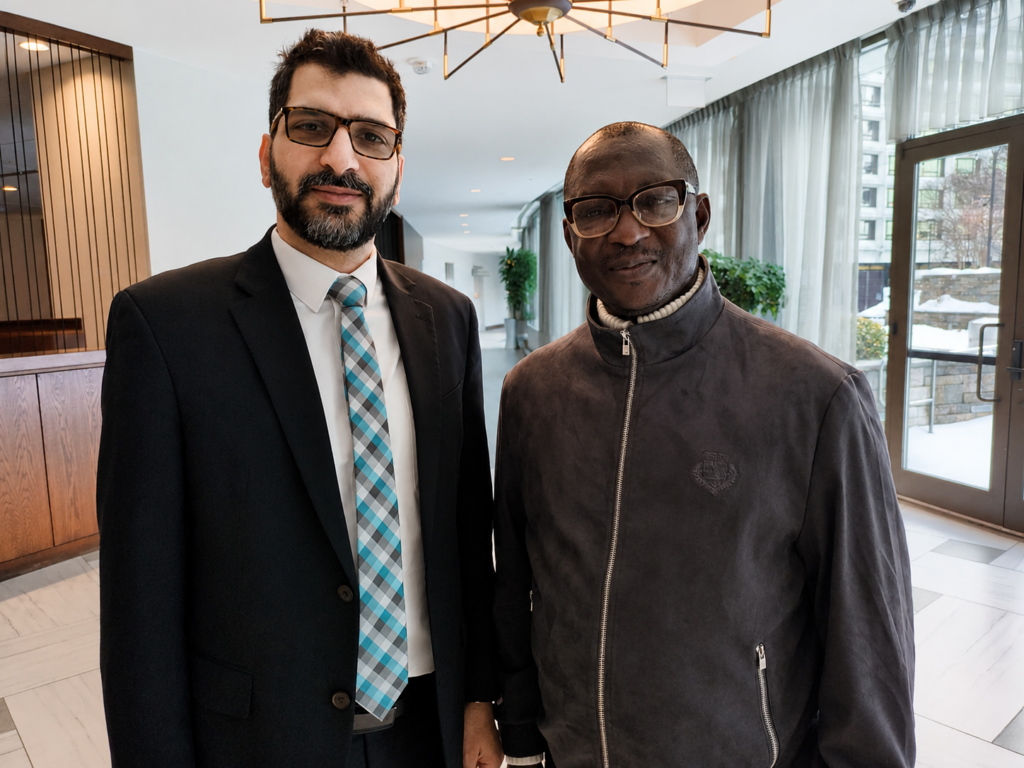
Wissam al-Saliby and Rev. Hayab
“Rev. Hayab is one of the few I know who relentlessly pursues peace by building bridges among divided communities while steadfastly insisting on justice and the protection of every person’s right to life,” said 21Wilberforce President Wissam al-Saliby. “In one of the world’s most difficult places to live amid violence and persistent evil, his life is a powerful witness to God’s call for righteousness and justice. We need to support and encourage leaders like Rev. Hayab, whose example strengthens the witness of the Church in Nigeria and across Africa.”
A Vision of Hope
Despite decades spent confronting violence and division, Rev. Hayab remains optimistic about Nigeria’s future. He believes that progress hinges on three structural shifts: strengthening the rule of law to hold perpetrators accountable, investing in education and economic opportunities for youth, and intentionally creating opportunities for interfaith and interethnic engagement.
His optimism is rooted in what he has witnessed firsthand. He has witnessed hostile communities reject retaliation in favor of reconciliation, and seen relationships triumph over fear. Most of all, he finds hope in a new generation of Nigerians refusing to inherit past hatreds.
In a nation too often defined by its fractures, Hayab’s life offers an alternative blueprint: a society where truth and reconciliation walk hand in hand, religious freedom is protected, and neighbors choose to live not as rivals, but as “one family under God.”
Leaders like Rev. Hayab are helping communities choose dialogue over division in some of the hardest places in the world.
Support leaders like Rev. Hayab
Photo credit: Global Peace Foundation Nigeria