September 2, 2026
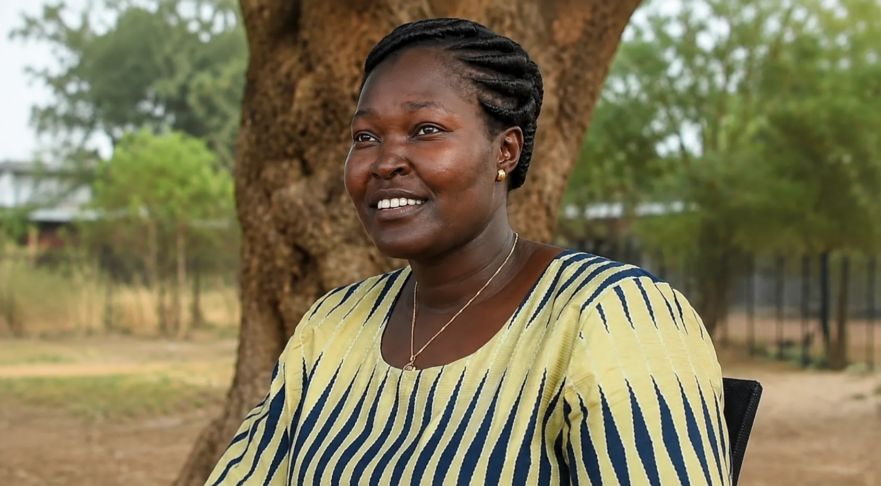
At 21Wilberforce, we know that defending human dignity and freedom isn’t just about international advocacy. It depends on courageous people who step up to change their own communities—even when the stakes are incredibly high. Lorna Merekaje is one of those people.
For more than ten years, Lorna has been working on the ground in South Sudan, advocating for human rights, democracy, and political reform. She serves as the Secretary-General for two major groups: the South Sudan Democratic Engagement, Monitoring and Observation Program (SSuDEMOP) and the Technical Secretariat of the Home-Grown Peace Initiative for South Sudan (HGPI-SS). But her drive to bring peace to her country didn’t start with a title or an organization. It started with her childhood.
A Childhood Shaped by War
Lorna grew up seeing firsthand the immense sacrifices made during South Sudan’s long war for independence. She often talks about how much she learned from the historical role of rural women, who kept communities alive by providing food and frontline support to soldiers. Their strength shaped everything she believes about women’s leadership and community resilience.
Because the war left her homeland with almost no infrastructure or school system, Lorna had to move to neighboring Kenya to get an education, eventually training as a biomedical technologist at the University of Nairobi. But as South Sudan drew closer to its historic 2011 independence referendum, she realized she couldn’t stay in a lab. In 2009, she completely pivoted her life toward community organizing, mediation, and civic education.
Learning from Failed Politics
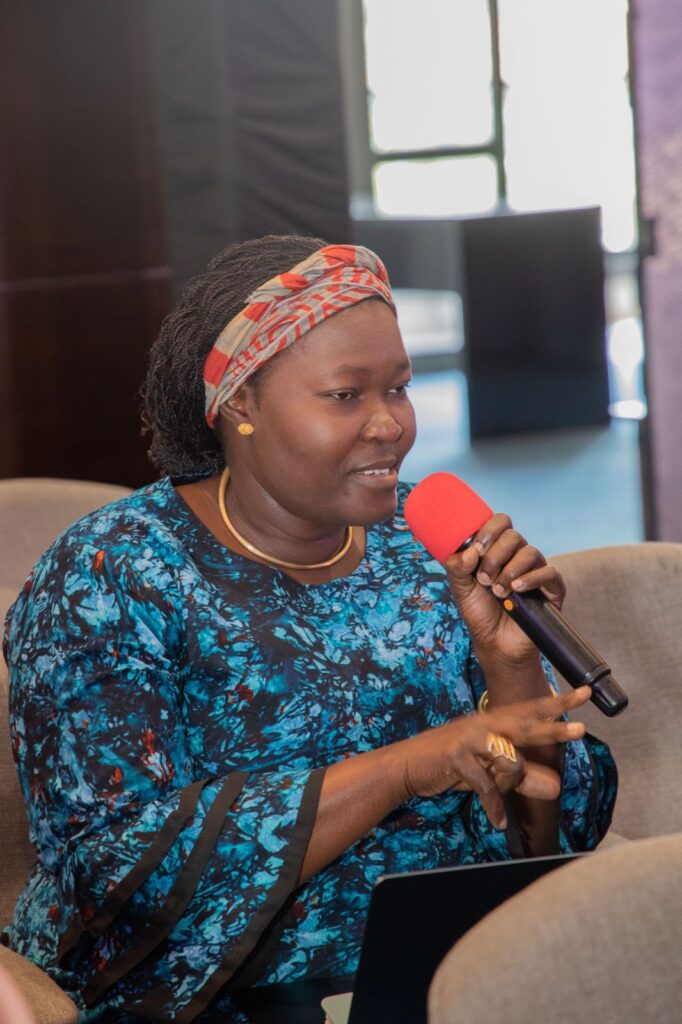
Lorna Merekaje South Sudan
Lorna quickly found herself in the middle of her country’s most significant political moments. She was an active participant in the peace talks in Addis Ababa from 2014 to 2015, served as a civil society representative nominated to the South Sudan Constitution Review Commission, and briefed the UN Security Council in 2019 about the role of women in peacekeeping. By 2020, her efforts earned her the prestigious Franco-German Prize for Human Rights and the Rule of Law.
But a decade of high-level diplomacy taught her a tough lesson: lasting peace will never come from repeating the same top-down formulas. Lorna is brutally honest about the crisis of leadership among the political elite, pointing to greed, dishonesty, and irresponsibility. Decades of failed political promises have left ordinary citizens feeling terrified and ignored. They are locked out of the very peace processes meant to save them. That frustration is exactly what sparked the launch of HGPI-SS in August 2025.
Putting Citizens at the Center
The Home-Grown Peace Initiative flips the traditional model on its head. It puts the real-life experiences of ordinary South Sudanese people at the very center of the strategy. Lorna’s philosophy is simple: the people who have to live with the brutal consequences of war are the ones who need to design the solution.
The community response has shown how hungry people are for this approach. More than 260 South Sudanese citizens have stepped up to volunteer, with teams working on community advocacy, program design, and a new Citizen’s Early Warning and Response System. “The commitment and dedication of the peace volunteers has been my biggest source of encouragement and motivation,” Lorna says. “The ordinary South Sudanese truly yearn for peace.”
Rediscovering Local Wisdom
HGPI-SS isn’t trying to reinvent the wheel. Instead, it draws on successful, historical peace frameworks built by South Sudanese communities in the past, like the Kuron and Wunlit processes.
Lorna often shares a story about the late Bishop Paride Taban, who once met with a group of heavily armed youth during a violent clash between neighboring communities. Instead of giving a political speech, the Bishop asked them three simple, penetrating questions:
- Who imports the guns?
- When you fire those guns, who will be the immediate victim?
- Are the children of the people supplying these weapons out here fighting with you?
Those questions cut through the political manipulation and caused the armed youth to rethink their choices and value peace over fighting. For Lorna, the lesson is clear: a local mediator who can talk directly to people involved in the conflict can achieve breakthroughs that politicians in distant boardrooms never could.
What Real Peace Looks Like
For Lorna, peace isn’t just a piece of paper signed by politicians in a capital city. True peace has to change everyday life. It means different ethnic groups being able to live next to each other safely. It means families being able to travel across the country without a military escort. It means communities refusing to let political elites use them as weapons.
This is why the initiative is building the Citizen’s Early Warning and Response System. In remote regions where people are cut off from communication and the reach of government, rumors and political propaganda spread fast. The resulting panic often causes entire villages to flee, causing families to lose their homes, livelihoods, and lives. By working through trusted local institutions like churches, traditional authorities, and community groups, this system is intended to provide accurate information to de-escalate tensions before violence ever starts.
Faith, Women, and Global Solidarity
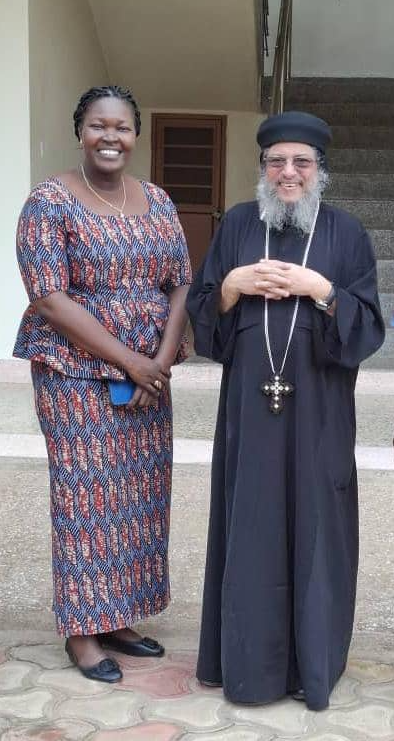
Lorna Merekaje South Sudan
For Lorna, faith is not separate from the work of peace. She believes faith communities have a vital responsibility to help South Sudan move toward peace.
Churches and faith communities are among the most trusted institutions in the country, capable of helping mediate conflict, mobilize communities, support development, provide credible information, and offer sanctuary during crises. To make sure their message reaches more people, the initiative has already translated its Eleven Principles into Arabic and hopes to produce an audio version for communities with lower literacy rates.
Lorna is also unyielding on one point: women must be present for every single conversation about reconciliation, peace, and nation-building. The women of South Sudan kept their communities alive during the war, and Lorna insists they must have an equal voice in deciding the country’s future, participating in all phases of peacebuilding, including process design and execution.
Refusing to Give Up Hope
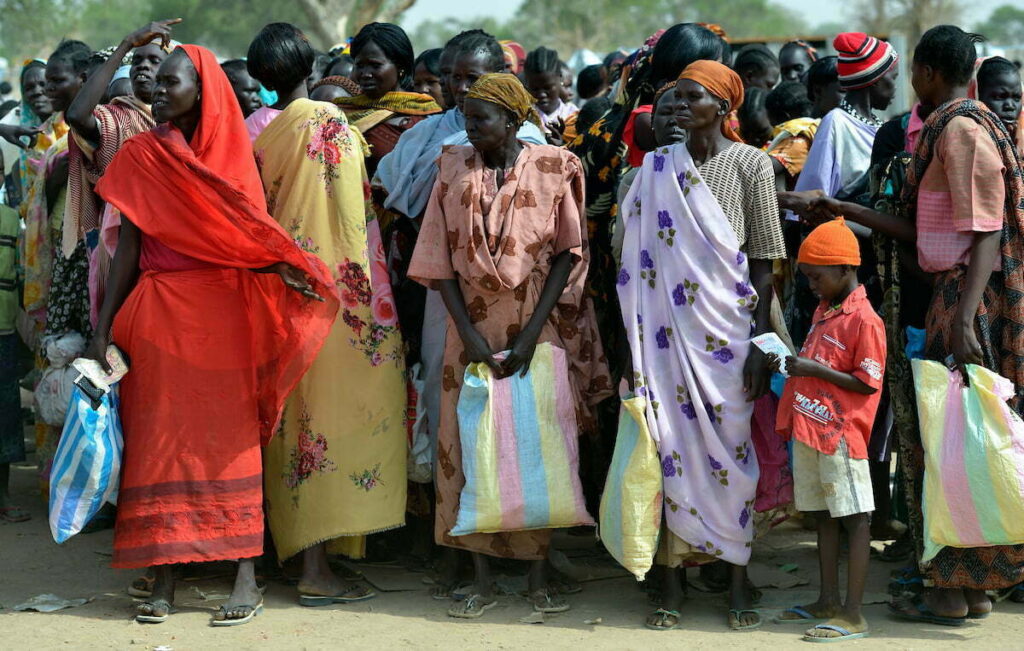
It would be easy to look at the corruption and systemic violence in South Sudan and lose hope. Lorna sees the devastation clearly, but she refuses to quit. She finds her hope in the resilient faces of children in displaced persons camps, the young people fighting to get an education in neglected schools, and the volunteers giving up their time for a better future.
(c) 2013 Paul Jeffrey
Her hope is not rooted in an expectation that South Sudan’s challenges will disappear on their own. It is rooted in the people of South Sudan—and in a faith that calls her and others to keep working for peace even when the path forward is difficult.
She leaves global faith communities with a direct call to action:
“First and foremost, I appeal to Christians and other faith communities around the world to continue praying for the people of South Sudan and the country. I would like them to understand that a nation in confusion can’t pull themselves out of the situation without support of others. I appeal to them to stand with us, amplify our plight in spaces where we may not be, but most importantly support the people of South Sudan in the efforts we are making towards achieving peace in our country.”
We are sharing Lorna’s story because she reminds us of a fundamental truth about human dignity and freedom: courageous people working faithfully in their own communities are often the ones who help safeguard it.
Leaders like Lorna are helping South Sudanese communities build peace from the ground up.
Featued image photo credit: Radio Tamazuj