
September 28, 2026
A former lawmaker turned advocate explains why lasting protection for Nigeria’s vulnerable communities depends on government and grassroots working together.
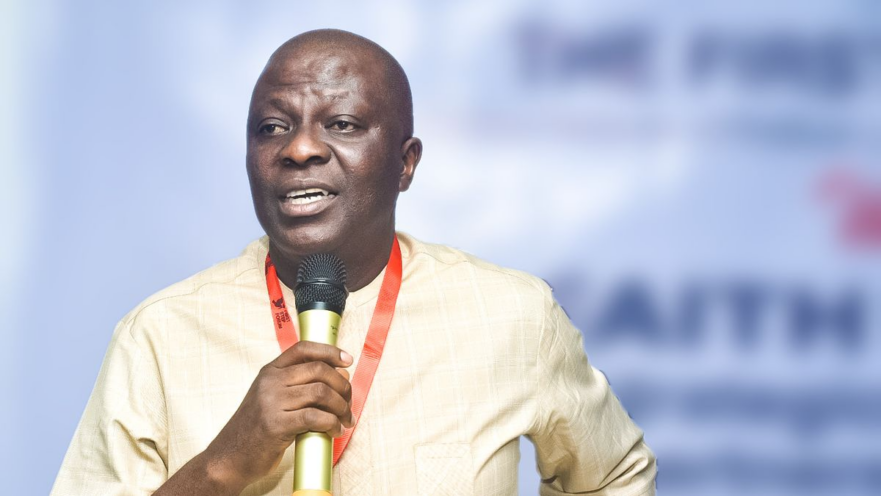
Dr. Dawari George has spent his career moving between worlds that rarely speak to one another: the university lecture hall, the executive offices of government, the floor of Nigeria’s House of Representatives, and the pews of his Baptist church in Rivers State. Today, as Executive Director of Global Freedom Network (GFN) Nigeria, he is working to get those worlds talking.
Asked what has changed most in recent years for freedom of religion or belief in Nigeria, he points to the conversation itself. “What is very evident is the level of awareness, consciousness and open conversation around the subject,” he says, among individuals, communities, government and religious leaders alike. “It is now on the front burner of national discourse. That is unprecedented in Nigeria’s history.”
Awareness is not the same as safety, and Dr. George is candid about how far there is still to go. But he sees in this moment an opening, and GFN Nigeria was built to use it.
From research to the halls of power
Dr. George’s path to advocacy began with scholarship. “This is the first time I am being asked to connect my personal experience to my decision to be involved in religious freedom advocacy,” he admits.
As a political economist studying African democracy and development, he kept running into what he calls “one disturbing variable”: political elites using religion to manipulate ordinary people. When those elites lose out in negotiations over power and patronage, he explains, “religion is introduced, and the local people are readily available to make themselves tools out of ignorance, poverty, lack of education and adherence to traditional loyalties.”
The pattern followed him out of academia. In the executive arm of government, it surfaced often in security reports. In Parliament, it came up again and again in petitions before the House Committee on Public Petitions.
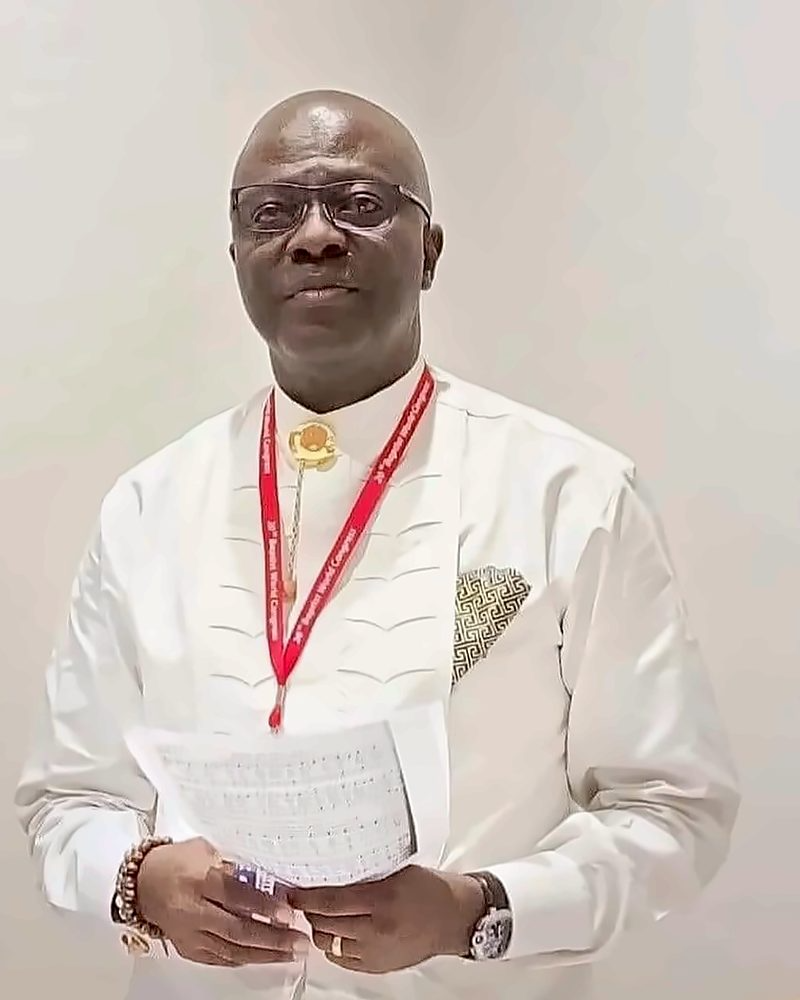
Dr. Dawari George at a Baptist World Congress meeting.
Then, in what he describes as “a divine arrangement,” 21Wilberforce named him its Ambassador for Africa, on the recommendation of Dr. Elijah Brown, now General Secretary of the Baptist World Alliance. “One thing led to another,” he says, and after his time with 21Wilberforce he founded Global Freedom Network.
A local home for a global mission
Dr. George launched GFN Nigeria in 2023 to, in his words, “domesticate” the work of 21Wilberforce by mobilizing Nigerians to take part in religious freedom and human rights advocacy themselves.
What sets the organization apart is where it aims. Drawing on relationships built over years of public service, GFN Nigeria brings information, data and local input directly to the policymakers whose decisions shape peaceful coexistence among Nigeria’s faith communities. It also works with security agencies, builds strategic partnerships and creates channels for feedback on what is and isn’t working.
On the ground, that work is carried out largely by young people. Aside from the board of trustees, the entire team is young, “self-motivated, passionate and in a hurry to make an impact,” Dr. George says. They work under two directorates, Planning and Operations and Mobilization and Stakeholder Engagement, with trained officers covering legal affairs, research and documentation, public advocacy and education, training, aid and humanitarian response, media, and an intelligence and early-warning system.
Closing the gap between the office and the village
If there is one idea at the heart of GFN Nigeria’s approach, it is that government and grassroots need each other. “Once one partner is absent or unavailable, we may never make progress,” Dr. George says.
He believes many NGOs working on religious freedom in Nigeria overlook this. “The missing link,” he says, “is the near absence and consideration of government and policy makers as critical stakeholders.” GFN Nigeria seeks to reduce the “mutual suspicion and blame game” between civil society and officials, and he says government leaders have welcomed being taken into confidence.
The gap runs both ways. From his seat in the House of Representatives, Dr. George watched lawmakers debate bills with intentions that were “not only pure but intentionally designed to resolve the issue.” Yet when he later saw those laws implemented, “I just cannot believe it is the same spirit and letter of that law passed.”
His prescription is to let communities lead. Government should ask local people to define their own challenges and then support them in solving them. “The view that government has the preserve of knowledge and knows what the people need is wrong and obsolete,” he says. “The democratization of the policy development process is the way to go.”
What the headlines miss
Dr. George does not soften what he hears from Christian and other vulnerable communities. “The reports are not encouraging,” he says. The pain, trauma and humanitarian needs make it hard to claim the desired progress.
Part of the difficulty is that religious, economic and purely criminal motives have become tangled together, creating confusion that he suspects is sometimes deliberate. That makes it hard to tell a religious freedom violation from violence driven by economic crime. In his view, the international community has too often “drowned in the confusion” by labeling all violence as religious persecution. “The oversimplifying of every violence has caused more confusion than helped to resolve it.”
His counsel to international organizations is one word: engage. “They should learn to listen first,” he says, hearing all sides and making independent inquiries beyond the groups in conflict. Treating Nigeria’s government as a pariah may create accountability, he argues, “but doesn’t ultimately solve the problem.” Engagement shows where the failures really lie and makes it possible to hold government accountable on informed ground. He credits 21Wilberforce and the First Step Forum for listening to local people and giving them “the platform to lead the change they desire.”
He asks the same discipline of churches. Faith leaders have “a mandate from heaven to preach peace, assist the vulnerable and displaced and proffer solutions,” and they must speak truth to power, but “devoid of insults, toxic language and without exaggeration.” Some responses, he warns, only escalate the crisis and put local communities at greater risk.
A story still being written
For all its challenges, Dr. George insists there is “more to Nigeria than violence.” He describes a nation rich in natural resources and in people who are “hardworking, resilient and driven by the spirit of excellence.” Nigeria has come to the edge many times, he notes, and bounced back each time. “This is a time to rewrite that story,” he says, “while genuinely recommitting and taking greater action to end the violence.”
His greatest hope rests with the country’s young people, “highly educated, exposed, informed and upwardly mobile.” Even on toxic social media, he sees them sharing “the can-do spirit” and a determination to avoid the mistakes of those who came before them.
He is quick to credit the partnership that set him on this path. “21Wilberforce remains the organization that inspired my involvement in religious freedom advocacy,” he says. “They came for me, trained me, gave me the necessary exposure,” and provided the platform from which GFN was born. GFN Nigeria is now a 21Wilberforce partner, and its management team has received training and resources from the organization.
To faith leaders and citizens around the world who care about Nigeria but feel overwhelmed by the headlines, his message is simple: “Do not despair. Do not lose your guard or your commitment to our shared humanity. Keep hope alive!”
Leaders like Dr. George are building lasting protection for vulnerable communities by bringing government and grassroots together.
Support leaders like Dr. Dawari George
About Global Freedom Network Nigeria: Global Freedom Network Nigeria is a human rights initiative dedicated to defending the universal rights to freedom of religion, belief, and conscience through a grassroots model that aids the persecuted and advances freedom worldwide. It leverages strong relationships within the Nigerian government while mobilizing community leaders to defend universal human rights. It is led by Dr. Dawari George, a political economist, former Nigerian parliamentarian and Baptist church leader from Rivers State.