
August 6, 2026
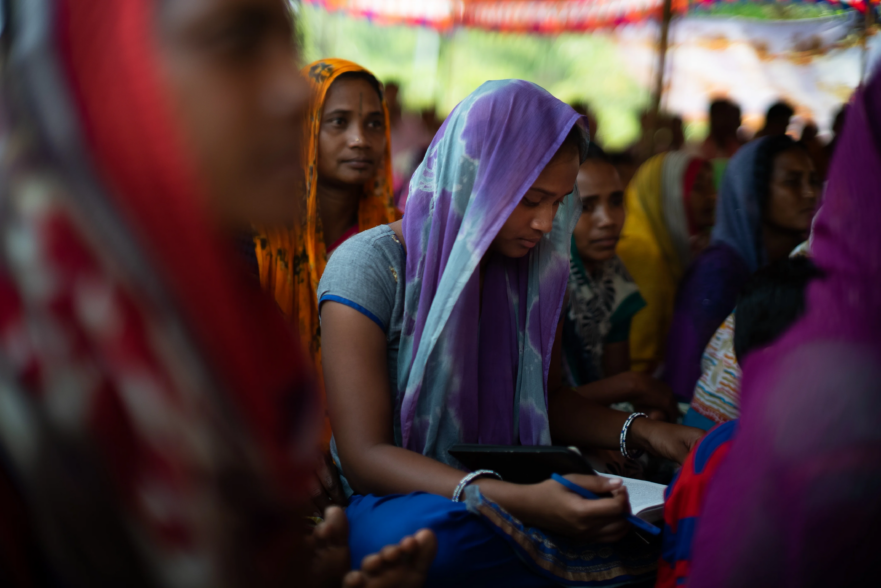
Throughout South Asia, women have long served as quiet but indispensable peacemakers. They have comforted families displaced by violence, mediated disputes within their communities, advocated for justice, and helped rebuild trust where conflict has left deep wounds. While their contributions are significant, they are too often overlooked, under-resourced, or excluded from formal peacebuilding efforts.
This fall, 21Wilberforce will partner with the Baptist Churches in South Asia, member conventions, and other Christian ministries to help change that reality through a new Women’s Peacemaking Workshop. The initiative is designed to strengthen the capacity of Christian women leaders to promote peace, prevent violence, and advance religious freedom throughout the region.
“21Wilberforce is committed to strengthening the capacity of national Christian leaders and church associations to prevent violence and religious persecution,” said 21Wilberforce President Wissam al-Saliby. “Our upcoming workshop with women leaders from diverse ethnic communities across South Asia builds on recent meetings and workshops with senior church leaders and young leaders from across the region. Together, these efforts are helping embed grassroots peacemaking and advocacy within local Christian institutions, with state- and national-level church bodies taking full ownership of this work.”
Building on Leadership God Has Already Raised Up
Rather than creating new leaders, this workshop recognizes and strengthens the women whom God has already placed in positions of influence. Across South Asia, women are already serving as trusted voices within churches, families, and communities. They often bridge divides that others cannot, bringing wisdom, compassion, and credibility to situations marked by tension and conflict.
The workshop will provide these leaders with practical skills, biblical encouragement, and ongoing support so they can become even more effective agents of reconciliation.
A Distinctly Christian Approach to Peacemaking
The training combines 21Wilberforce’s peacemaking curriculum with the experience and contextual knowledge of local Christian partners. Facilitated by an all-women team—including experienced peacebuilders from Northeast India—the workshop will ensure that participants learn within a framework that is both biblically grounded and deeply relevant to the realities they face.
Training sessions will be highly interactive, featuring Bible study, small-group discussions, case studies, and role-playing exercises based on real conflict situations. Participants will explore topics such as:
- Biblical foundations for Christian peacemaking and reconciliation.
- Trauma-informed approaches to healing individuals and communities affected by conflict.
- Practical tools for conflict analysis, mediation, dialogue facilitation, and advocacy.
- Strategies for engaging church leaders across generations to strengthen convention-wide peace initiatives.
- Developing practical action plans for addressing conflict and promoting reconciliation within their own communities.
By emphasizing participation rather than lectures alone, the workshop allows women to learn from one another while practicing new skills in a supportive environment.
Multiplying the Impact
One of the workshop’s most important goals is long-term sustainability. One woman from South Asia will receive additional mentoring throughout the training process, preparing her to become a future facilitator who can replicate the program across the region. This “train-the-trainer” approach enables local churches and women’s networks to continue equipping new generations of Christian peacebuilders long after the workshop concludes.
Participants will also develop context-specific action plans and receive follow-up support as they begin implementing what they have learned. The goal is not simply a successful training event, but lasting transformation within churches and communities.
Strengthening the Church’s Witness for Peace
As women become more deeply integrated into convention-level peace strategies and decision-making, churches throughout South Asia will be better equipped to respond to conflict with wisdom, courage, and hope.
The vision extends beyond individual leadership development. It is about strengthening the Church’s collective witness as an instrument of reconciliation in a region where ethnic, religious, and political tensions continue to challenge communities.
When women are equipped, recognized, and connected with one another, their influence extends far beyond the workshop itself. They become catalysts for healing in families, advocates for justice in their communities, and faithful ambassadors of Christ’s reconciling love.
Photo credit: Liveglobal.org