Editor’s Note: This Field Story is based on information gathered by the Security Team of the Gideon & Funmi Para-Mallam Peace Foundation (TP-MPF), a Nigerian non-governmental faith-based organization committed to nation building through the promotion of peaceful coexistence, leadership development, and social justice.
NARIDON COMMUNITY, Kaduna State, Nigeria — Long before sunrise on July 27, 2026, the quiet farming community of Naridon in Chawai Chiefdom became the scene of unimaginable loss. Families who had gone to bed expecting another ordinary night instead awoke to gunfire, flames, and the desperate cries of neighbors fleeing for their lives.
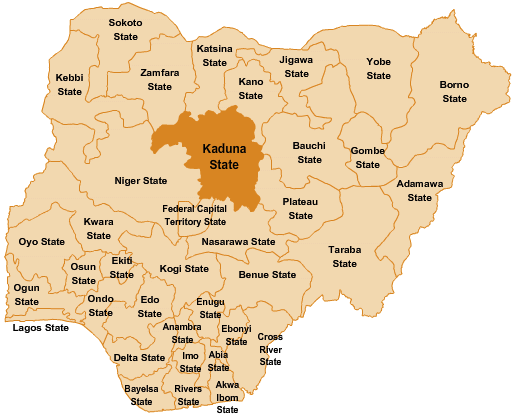
Map of Nigeria showing Kaduna State. Photo credit: Researchgate
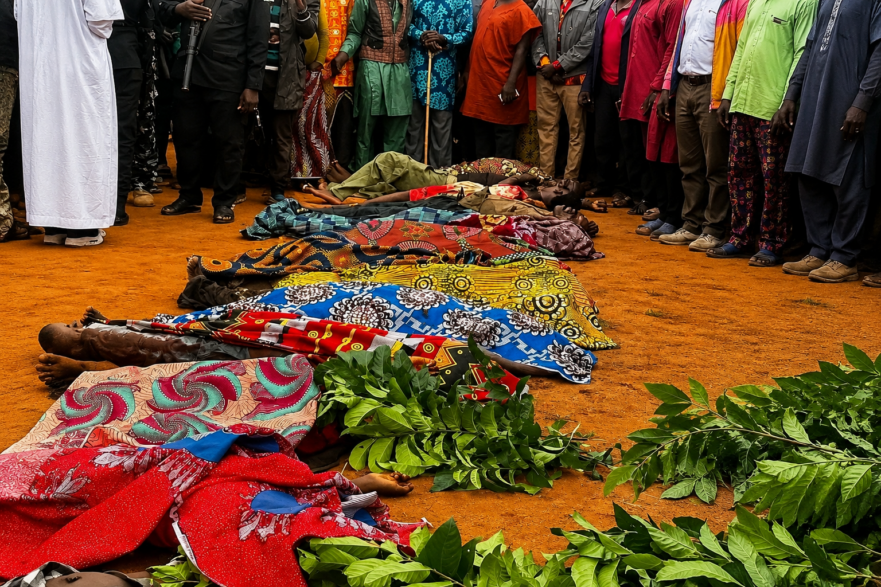
According to eyewitness accounts collected by the Security Team of the Gideon & Funmi Para-Mallam Peace Foundation (TP-MPF), armed assailants entered the community shortly after midnight and attacked residents for nearly three hours. By dawn, at least 30 people—including women and children—had been killed, homes and shops had been burned, and survivors had begun the heartbreaking task of searching for loved ones and recovering the dead.
Key details of the attack have been independently corroborated by Reuters and the Associated Press. Both reported that at least 30 people were killed, including women and children. Reuters also reported that eight of those killed were children and that attackers opened fire indiscriminately and set homes ablaze before fleeing. Security personnel arrived only after the attack had ended, leaving community members to become the first responders for their own village.
For those who survived, the hours after the violence ended were marked not by relief but by grief. Barnabas Musa, a resident interviewed by TP-MPF’s Security Team, said distress calls began shortly after midnight as gunfire spread across the community. He recalled that the attack continued until approximately 3:00 a.m., leaving residents to recover bodies from homes and transport victims to the morgue after the attackers fled.
Another community member described the attack as one of the worst Naridon has experienced. According to his account, one family lost multiple children during the assault, while neighbors spent the morning moving from house to house searching for additional victims.
A Deepening Humanitarian Crisis
Beyond the immediate loss of life, the attack has deepened the humanitarian crisis facing many rural communities in Southern Kaduna. TP-MPF documented injuries among survivors, the destruction of homes and businesses, and the devastating impact on families who lost multiple relatives in a single night. Among those killed, eight were children, and more than twenty members of one extended family reportedly lost their lives.
For residents of Chawai Chiefdom, the violence did not occur in isolation. TP-MPF’s field documentation notes that communities throughout Kauru Local Government Area have experienced attacks in recent years involving killings, kidnappings, displacement, and destruction of property. Local leaders have repeatedly appealed for greater protection for vulnerable farming communities, warning that many remain exposed to coordinated nighttime attacks.
The recurring violence has often been linked by local communities and researchers to a complex mix of competition over land and natural resources, weak security, criminality, and long-standing ethnic and religious tensions. At the time of writing, no group had publicly claimed responsibility for the attack. Local residents interviewed by TP-MPF believe that militant Fulani herdsmen were responsible.
Government Response and the Path Forward
Following the attack, Governor Uba Sani, through Kaduna State Commissioner for Information Ahmed Maiyaki, condemned the killings, directed security agencies to intensify efforts to apprehend those responsible, and instructed the Kaduna State Emergency Management Agency (KADSEMA) to provide immediate humanitarian assistance to affected families. The statement also reaffirmed the state’s commitment to working with neighboring Plateau State, security agencies, traditional leaders, and other stakeholders to improve security along the Kaduna–Plateau border.
The Governor’s response acknowledged the immediate humanitarian needs of the community. Yet, as TP-MPF’s field reporting makes clear, many residents believe the deeper challenge remains preventing such attacks from recurring. While emergency assistance is urgently needed, they continue to hope for sustained security measures that will protect vulnerable rural communities and allow families to live without fear.
Amplifying Voices for Accountability
For 21Wilberforce, stories like Naridon’s are more than accounts of tragedy. They provide a window into the lived experience of communities facing persistent insecurity and violence that too often receive little international attention. Through trusted partners such as the Gideon & Funmi Para-Mallam Peace Foundation, 21Wilberforce is able to amplify credible, community-based reporting that might otherwise never reach policymakers, faith leaders, human rights advocates, or the international community.
Documenting these incidents serves a larger purpose. It preserves the voices of survivors, identifies patterns of recurring violence, and provides reliable information that can inform advocacy for greater protection of vulnerable communities, accountability for perpetrators, and policies that advance freedom of religion or belief and peaceful coexistence.
As Naridon mourns those who were lost, the community’s hope extends beyond rebuilding homes. Residents hope that the deaths of their family members will not become another forgotten statistic, but instead serve as a catalyst for meaningful action that protects civilians, strengthens accountability, and helps prevent future violence.
July 30, 2026
Photo credit: Gideon & Funmi Para-Mallam Peace Foundation