May 4, 2026
In June 2026, the United Nations Special Rapporteur on Freedom of Religion or Belief, Nazila Ghanea, will conduct an official country visit to Nigeria at the invitation of the government. As part of this visit, the Special Rapporteur will seek to develop a first-hand understanding of the realities shaping freedom of religion or belief in Nigeria. In her role as an independent expert appointed by the United Nations Human Rights Council, she is tasked with identifying both longstanding and emerging barriers to the freedom of thought, conscience, religion, and belief, and offering practical recommendations to address them.
In advance of this visit, the Office of the United Nations High Commissioner for Human Rights invited submissions from civil society organizations, faith groups, academics, and other stakeholders to help inform her assessment, meetings, and eventual report to the international community.
The following submission was prepared by 21Wilberforce in collaboration with five Nigerian in-country partners in response to that request. It examines the intersection of policing and freedom of religion or belief (FoRB) in Nigeria.
We share it here in full as part of our commitment to clarity, accountability, and informed advocacy, trusting that greater awareness can contribute to more effective action on behalf of those whose freedom to believe, worship, and live in peace remains under threat.
Protecting Freedom of Religion or Belief in Nigeria Through Police Reform: Submission to the UN Special Rapporteur on Freedom of Religion or Belief
29 April 2026
Submitting Organizations:
African Center for Religious Freedom and Peacebuilding Abuja, Federal Capital Territory, Nigeria
Christian Awareness Initiative of Nigeria Kaduna, Kaduna State, Nigeria
Nigeria Evangelical Fellowship Shao, Kwara State, Nigeria
The Gideon & Funmi Para-Mallam Peace Foundation Jos, Plateau State, Nigeria
Theo-Sight Institute for Research and Advocacy Abuja, Federal Capital Territory, Nigeria
21Wilberforce Falls Church, Virginia, United States
This submission examines the intersection of policing and freedom of religion or belief (FoRB). It uses the 18 January 2026 attack on three churches in Kurmin Wali village, Kaduna State, as a case study to highlight challenges and identify solutions to protect religious freedom in Nigeria. Drawing on this analysis, our organizations recommend that the Nigerian government adopt more effective policing strategies to safeguard FoRB. These include securing places of worship, decentralizing policing, integrating religious leaders into policing efforts, and strengthening partnerships with the international community.
Attack on Kurmin Wali Community During Sunday Morning Worship
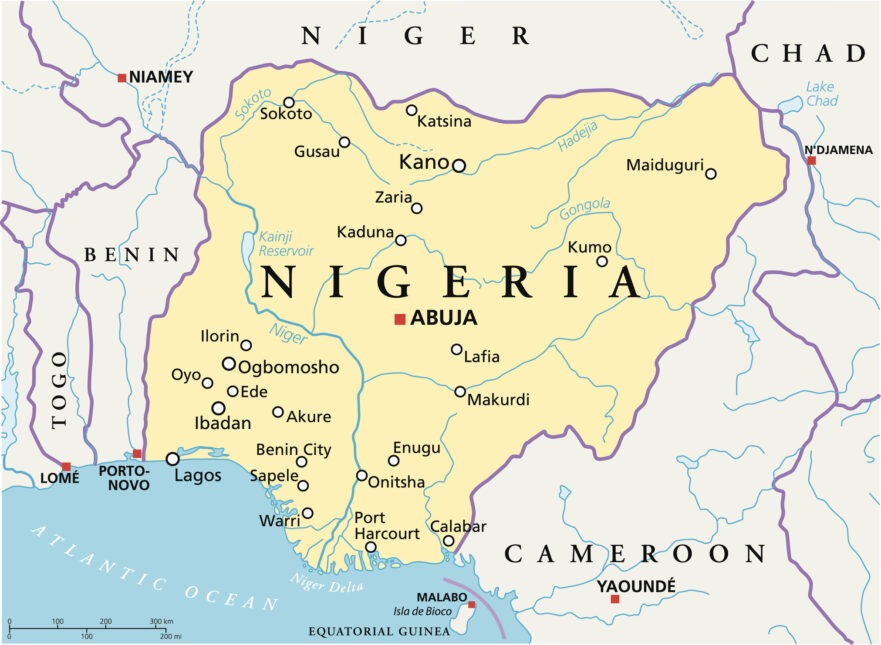
Researchers from two of our partner organizations conducted field visits on 21 January and 3 March to the Kurmin Wali community in Kaduna State, which was the site of an attack targeting the village and its places of worship.[1] On Sunday, 18 January 2026, dozens of armed bandits riding motorcycles attacked three churches during morning worship services: Kurmin Wali Evangelical Church Winning All (ECWA), Albarka Cherubim and Seraphim Church, and Haske Cherubim and Seraphim Church. A villager promptly called a military checkpoint only a few kilometers away to report the attack. The military personnel called their superior officer, who told them to wait for backup. By the time soldiers arrived, the bandits had left with scores of kidnapped victims. Our researchers worked with the Kurmin Wali village head to verify 89 worshipers were abducted (not 177 as widely reported). Residents testified the 18 January 2026 attack was only the latest of more than twenty attacks since 2022, including the abduction of 22 worshipers the prior Sunday, 11 January, costing the community 2.6 million naira in ransoms, according to pastor Micah Akan, chairman of the local Afogo Ward of the Christian Association of Nigeria. The captives were held for over a week before all were ransomed and released to Kaduna officials of the Department of State Services.
Senior security and political authorities—including Kaduna State Police Commissioner Muhammad Rabiu and Kajuru Local Government Area Chairman Dauda Madaki—issued initial statements that contradicted or downplayed reports of the attack.[2] Community leaders reported that access to the village was temporarily restricted for independent observers and media. While authorities eventually acknowledged the attack, their initial actions undermined public trust and reinforced perceptions of institutional unwillingness to address rural insecurity.
The attack on Kurmin Wali is not an isolated incident but part of a recurring pattern of coordinated violence in Nigeria’s Middle Belt that interferes with the exercise of freedom of religion or belief (FoRB). Attacks during major religious observances have repeatedly occurred in recent years. In Plateau State alone, on this year’s Palm Sunday at least 27 people were killed in Angwan Rukuba (29 March 2026), reviving the pain of last year’s Palm Sunday when 51 people were killed in Zike (13–14 April 2025). Both occurred in predominantly Christian communities in Plateau, as did the December 2023 Christmas Eve attacks in the state’s Local Government Areas of Bokkos and Bassa which destroyed churches and killed over 140 civilians.
If implemented, the following recommendations can help prevent FoRB-violating attacks like the ones in Kurmin Wali, Angwan Rukuba, Zike, and Bokkos by improving anticipation, deterrence, and prevention.
1. Protect Places of Worship
UN General Assembly resolution 77/221 (2022) urges states “to ensure, in particular, the right of all persons to worship, assemble or teach in connection with a religion or belief.”[3]
The attacks in Kurmin Wali and throughout the Middle Belt region underscore the urgent need to protect places of worship in Nigeria. Such sites have become frequent targets of violence due to their vulnerability. The targeting of multiple churches during worship services indicates a pattern of attacks that interferes with the exercise of FoRB.
Recommendations:
Local/State Level
- Deploy Protection Personnel During Worship Services and Religious Holidays: This is a critical preventive measure for Nigerian police and security services to protect FoRB in high-risk areas and periods. Attacks in Nigeria have occurred frequently when communities are gathered for services, such as Sunday worship, Friday prayers, or major observances like Easter and Eid.
- Conduct risk assessments to identify vulnerable places of worship: Churches and other places of worship should be incorporated into Nigerian police security risk mapping and patrol planning. Police should provide communities with guidelines on locating worship centers, settlement patterns, and land-use planning to reduce exposure to attacks.
Federal Level
- Establish Early Warning and Response Mechanisms: While Nigerian security personnel were posted nearby, it was not enough to protect the community of Kurmin Wali. Even when warnings occur, bureaucratic delays in authorization for intervention allow attackers to complete their operations without confrontation. Additionally, there are often long distances between villages and security outposts. Local religious leaders and communities should be formally incorporated into early warning mechanisms to identify threats and respond promptly. Police and security forces should establish rapid response protocols with defined maximum response times following distress alerts.
One example mechanism is the National Conflict Early Warning Early Response System (NCEWERS), created by a Nigerian government think tank, the Institute for Peace and Conflict Resolution. It is a nationwide mechanism that collects real-time data on conflict risks, analyzes it through a central situation room, and triggers preventive responses to stop violence before it escalates. It brings together community monitors and local peace committees, state-level coordinators, federal government institutions, security agencies, civil society, and traditional leaders in a coordinated system.[4]
2. Decentralize Policing
Nigeria’s current centralized policing structure, which permits only a federal force, has proven insufficient to address insecurity, particularly in rural regions.
The Nigerian government’s failure to respond quickly to the attack at Kurmin Wali reflects a broader pattern: security forces often receive advance warning of attacks but fail to act in time to prevent deaths or kidnappings.
The UN Human Rights Committee affirmed that it is the responsibility of all states “to take special measures of protection towards persons in vulnerable situations […] They may also include members of ethnic and religious minorities. States parties must respond urgently and effectively in order to protect individuals who find themselves under a specific threat…”[5] Decentralized policing is a step the Nigerian government can take to effectively protect those under threat. While decentralization may improve responsiveness, safeguards are necessary to prevent political misuse, discrimination, or uneven protection across states.
Recommendations:
Local/State Level
- Integrate Community Protection Groups: Integrating local self-defense vigilante groups into Nigeria’s formal policing architecture is essential for strengthening the protection of vulnerable religious communities. Groups such as the Boys’ and Girls’ Brigades from the Christian community, First Aiders of Jama’atu Nasril Islam and Fityanul Islam of Nigeria from the Muslim community, traditional rulers, religious leaders, and youth and women leaders should be evaluated for integration into community policing and peacebuilding teams.[6] These local groups are often the first to detect threats and respond to attacks, given their proximity, local knowledge, and trust within communities. The government should provide vetted community protection groups with clear legal mandates, training in human rights and accountability, and structured channels for communication with police and military actors. Such integration must be inclusive of all religious and ethnic groups to avoid reinforcing divisions and should be accompanied by oversight mechanisms.
Federal Level
- Enact Constitutional Reform: Nigeria’s National Assembly is currently evaluating proposed reforms that would allow individual states to create their own police forces. This would require amending Nigeria’s Constitution to move policing from the Exclusive Legislative List, where only the federal government has authority, to the Concurrent List, where both federal and state governments can legislate and operate. If adopted, the Framework for State Police reform—endorsed by the Nigeria Governors’ Forum this month—would permit states to create and manage their own police forces alongside the federal police.
3. Adopt an All-of-Society Approach to Policing
Effective protection of FoRB requires more than institutional reform. It also requires rebuilding trust between police forces and the religious communities they serve. In many parts of Nigeria, there is deep mistrust due to delayed responses, perceived bias, and lack of accountability.
The initial denials by government officials that the 18 January Kurmin Wali attack even occurred exemplify the need for accountability and the inclusion of religious communities to restore trust.
An all-of-society approach to policing recognizes that protection is a shared responsibility involving government, religious communities, and civil society.
Recommendations:
Local/State Level
- Integrate Religious and Community Leaders: Religious and community leaders should be formally integrated into protection planning and early warning systems. These leaders can serve as critical channels for intelligence sharing, conflict mediation, and trust-building between communities and security actors, helping to improve responsiveness and accountability. Moving beyond simplistic narratives of conflict requires the integration of local leaders’ knowledge of specific contexts, meanings, and actors.[7] Police-Community Relations Committees should be strengthened or established at the local level, bringing together traditional rulers, faith leaders, youth, and women. [8]
- Leverage Local Funding and Ownership: Development funding should be allocated at both the ward level and local government area level to support community protection initiatives, ensuring that protection efforts are locally selected, led, and sustained. Strengthening administrative capacity at the local level is essential to effectively manage these resources such as Renewed Hope federal funding for wards and to implement context-specific strategies.
All Government Levels
- Ensure Representation and Inclusivity: Police forces should reflect the religious and ethnic diversity of the communities they serve to build trust and legitimacy. Policies must be implemented to prevent the exclusion or marginalization of minority groups within protection structures, ensuring equal protection under the law.[9]
- Strengthen Accountability and Transparency: Policymakers need to incorporate feedback from affected communities into policy design and implementation to ensure that responses are grounded in local realities and better equipped to address the specific vulnerabilities of religious communities. Nigerian civil society and government actors must hold all officials accountable to prevent the denial or misrepresentation of attacks, as such practices undermine both trust and the ability to respond appropriately to threats.
4. Partnerships for Learning and Accountability
Nigeria can strengthen its protection of FoRB by learning from policing models in other countries and engaging in partnerships.
Recommendations:
Federal Level
- Create Partner Agreements for Capacity Building: Nigerian police forces and policymakers should engage in partnerships with international organizations, regional bodies, and bilateral partners with policing expertise to strengthen policing capacity and improve protection for vulnerable communities. Such cooperation should be tied to clear benchmarks on human rights compliance, including the protection of freedom of religion or belief, ensuring that capacity-building efforts reinforce accountability and international standards.
[1] Christian Awareness Initiative of Nigeria and Theo-Sight Institute for Research and Advocacy, “Mass Abduction in Kurmin Wali Exemplifies Nigeria’s Rural Protection Crisis,” March 24, 2026. Available upon request.
[2] BBC News, “Nigeria Police Confirm Mass Church Abductions After Previous Denial,” January 21, 2026, https://www.bbc.com/news/articles/c4grw9vg7y4o
[3] United Nations, Rapporteur’s Digest on Freedom of Religion or Belief, Special Rapporteur on Freedom of Religion or Belief, 2017, 26.
[4] Michael Olugbode, “IPCR Strengthens National Conflict Early Warning System to Improve Peace, Security in Nigeria,” ThisDay, March 25, 2026, https://www.thisdaylive.com/2026/03/25/ipcr-strengthens-national-conflict-early-warning-system-to-improve-peace-security-in-nigeria/
[5] United Nations, Rapporteur’s Digest, 166.
[6] The Para-Mallam Peace Foundation and Plateau Peace Practitioners’ Network (PPPN), One-Day Multi-Stakeholder Roundtable Dialogue on Community Policing as a Panacea for Insecurity in Nigeria: The Case of Plateau State, June 26, 2025, 4. Available upon request.
[7] Godwin Adeboye, “Diagnosis and Misdiagnosis of Religion-Induced Conflict in Nigeria: A Data-Driven Analysis” (Theo-Sight Institute for Research and Advocacy, 2026). Available upon request.
[8] Para-Mallam Peace Foundation and PPPN, One-Day Multi-Stakeholder Roundtable Dialogue, 3.
[9] Para-Mallam Peace Foundation and PPPN, One-Day Multi-Stakeholder Roundtable Dialogue, 7.