In March 2026, a delegation from the First Step Forum (FSF) traveled to Abuja, Nigeria, for a series of high-level engagements with religious leaders, civil society organizations and government officials. The visit — co-facilitated by 21Wilberforce in partnership with local Nigerian organizations — marked the forum’s first official visit to the country and an important step in strengthening international collaboration to address persistent religious violence and promote peaceful coexistence in one of Africa’s most influential nations.
The First Step Forum delegation, comprising European political leaders and advocates, including Eduard Heger, Marc Jost and Gudrun Kugler, came not to prescribe solutions, but to listen, learn and build relationships. Their approach set the tone for a series of candid and constructive conversations across religious and political lines.
A listening-first approach
Nigeria continues to face complex challenges in the Middle Belt and northern regions, where insecurity, resource competition and religious tensions have contributed to cycles of violence and displacement. Against this backdrop, the forum convened a “Consultative Dialogue on Religious Freedom and Peacebuilding,” bringing together Christian and Muslim leaders alongside grassroots organizations working on the front lines of these challenges.
What distinguished the visit was its emphasis on humility and partnership. Rather than arriving with predetermined recommendations, the delegation prioritized hearing directly from those most affected. Local leaders shared firsthand accounts of insecurity, gaps in government protection and the urgent need for stronger community-based peacebuilding efforts.
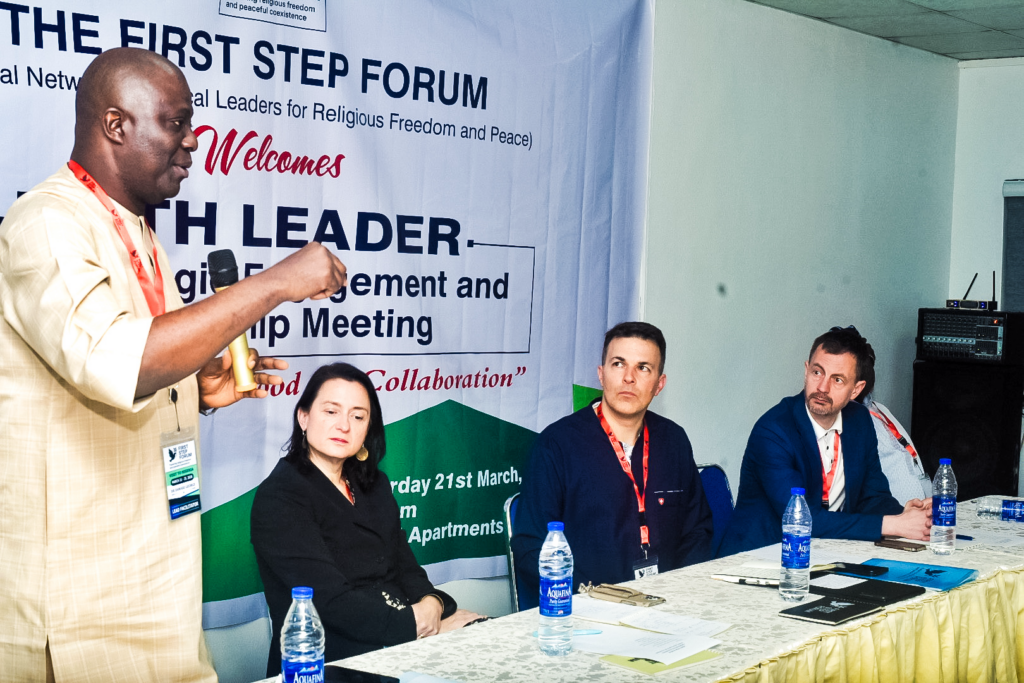
First Step Forum delegation members Eduard Heger, Marc Jost and Gudrun Kugler with lead facilitator of the visit, Dawari George . Photo credit: First Step Forum
This posture of listening helped build trust and set the visit apart from previous international engagements. Former Nigerian parliamentarian Dawari George, who served as lead facilitator of the visit and heads the Global Freedom Network–Africa, observed, “All the individuals and groups we met with acknowledged one thing — this is the first international mission we have seen that came to listen and learn and join local people in finding solutions to their challenges. At no time did they start by making value judgments or proposing any action plan.”
Purpose of the visit
The visit was guided by several core objectives:
-
- Strengthen the capacity and resilience of Christian communities in Nigeria
- Build and deepen relationships with local Muslim leaders
- Strengthen interfaith engagement and cooperation
- Support locally led efforts to prevent violence and promote peaceful coexistence
These priorities shaped both the structure of the visit and the outcomes that emerged from it.
The Abuja Declaration
A central outcome of the visit was the adoption of a jointly issued communique by Muslim and Christian leaders, framed as the Abuja Declaration for Sustainable Peace and Religious Harmony.
The communique acknowledges the suffering caused by ongoing violence while identifying key drivers of the crisis, including insecurity, competition over land and resources, often intensified by climate pressures, and a culture of impunity.
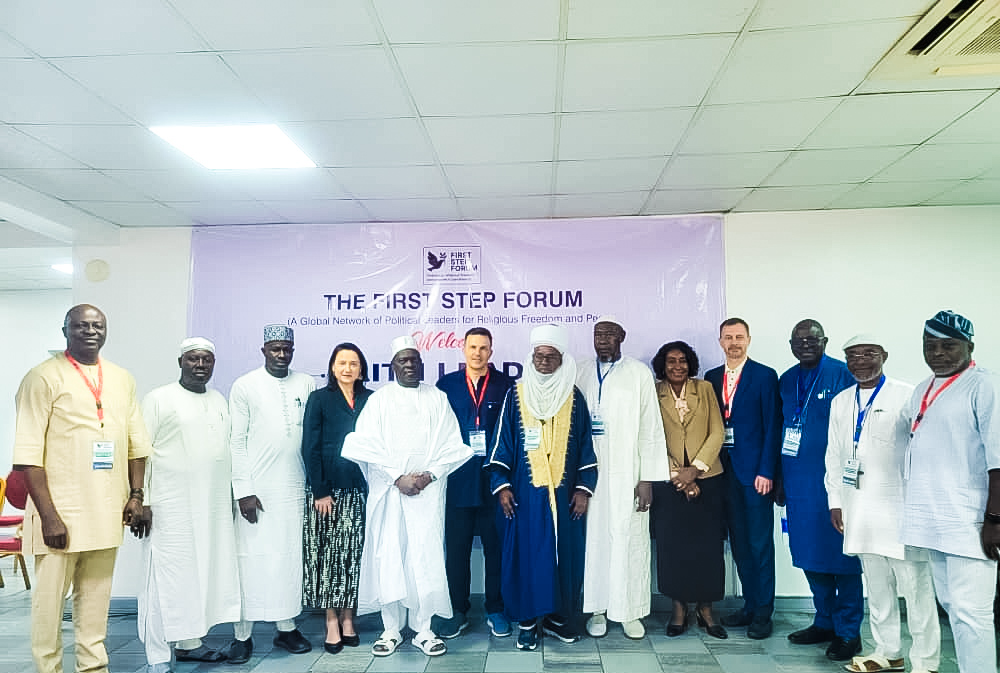
First Step Forum delegation members Eduard Heger, Marc Jost and Gudrun Kugler met with Dawari George and local faith leaders in Nigeria. Photo credit: First Step Forum
It also outlines a shared path forward:
- A rejection of violence carried out in the name of religion
- Strengthening early warning systems and interfaith mediation at the local level
- Promoting healing, reconciliation and restorative justice
- Calling on the Nigerian government to ensure equitable protection for all citizens and uphold the rule of law
- Encouraging international partners to support grassroots peacebuilding and the protection of vulnerable communities
The communique reflects a growing consensus that sustainable peace in Nigeria will require both local ownership and international partnership.
Engagement across government and civil society
Beyond the interfaith dialogue, the delegation met with Nigerian government officials at senior levels, including representatives from the Ministry of Foreign Affairs and the National Assembly, as well as Deputy Speaker Benjamin Okezie Kalu.
Discussions focused on opportunities for deeper cooperation on governance, security and economic development. Nigerian officials reaffirmed their commitment to human rights, peaceful coexistence and international partnership, while also emphasizing the role of economic growth in addressing instability.
The government’s response to the forum’s approach was notably positive. As George explained, “The Nigerian government’s impression was clearly reflected in their enthusiasm to deepen the relationship with the FSF. They saw the team as reasonable, authentic and credible. They practically gave them unrestrained access going forward.”
In meetings with lawmakers, conversations extended beyond security concerns to include long-term stability through economic opportunity, particularly for Nigeria’s large youth population. Ideas such as near-shoring, technology transfer and local value creation were highlighted as potential pathways to reduce instability and migration pressures while strengthening ties with European partners.
The visit also created space for local voices to be heard directly at the highest levels. During meetings with government officials, several Nigerian partners submitted incident reports and policy recommendations, ensuring that the experiences of affected communities informed ongoing discussions.
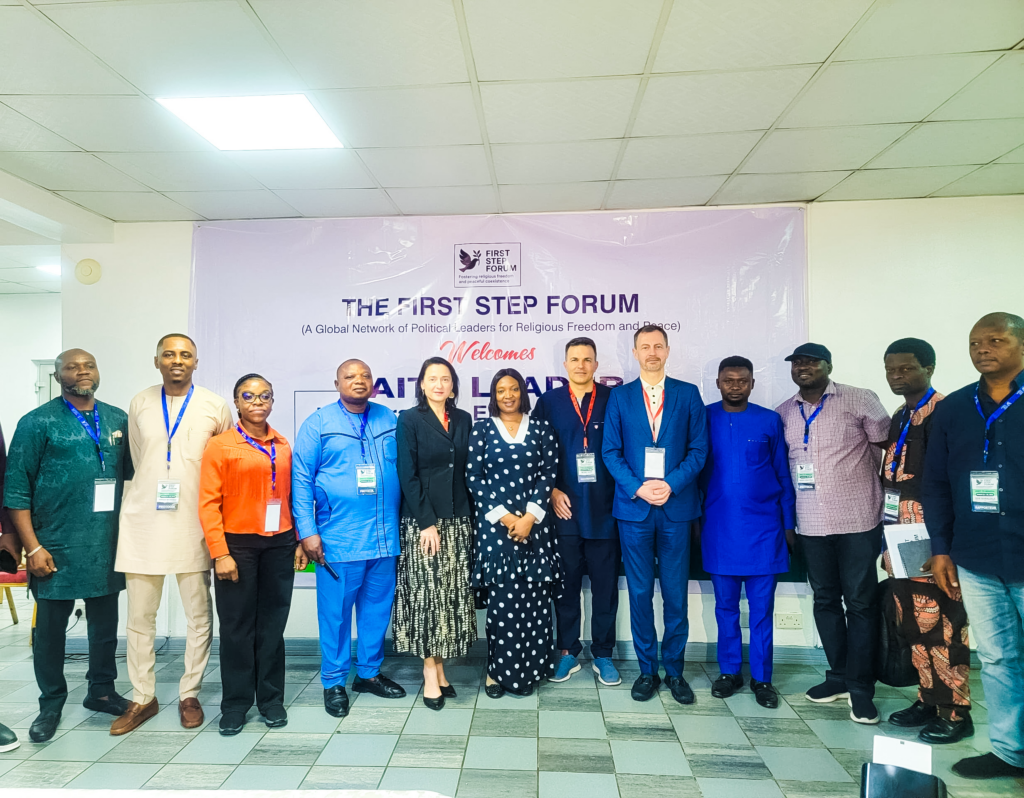
First Step Forum delegates met with Nigerian local NGO leaders. Photo credit: First Step Forum
Civil society voices remained central throughout the visit. Representatives from Nigerian organizations emphasized that while policies exist, their impact is often not felt at the grassroots level. Their testimony reinforced the importance of supporting local actors working to prevent violence and foster coexistence.
A foundation for ongoing collaboration
The visit underscored the role of the First Step Forum as a bridge builder connecting political leaders, faith communities and civil society across national boundaries. Its model of quiet diplomacy and relational engagement proved especially valuable in a context as sensitive and complex as Nigeria.
Local partners played a key role not only in convening stakeholders but also in co-facilitating the visit, helping ensure that discussions were grounded in local realities. Their leadership helped shape both the tone and substance of the engagements and contributed to outcomes reflecting community priorities.
Future implementation will be critical. George emphasized the importance of sustained local coordination: “The FSF will need to put in place a local working team to coordinate the continuous engagement of the NGOs and faith leaders in taking practical steps toward implementing the outcome of the initial meetings.” He added that the trust built during the visit provides a strong foundation: “These stakeholders believe in the FSF, and it can leverage that trust to drive the process to a point where they can run without any external help.”
Looking ahead
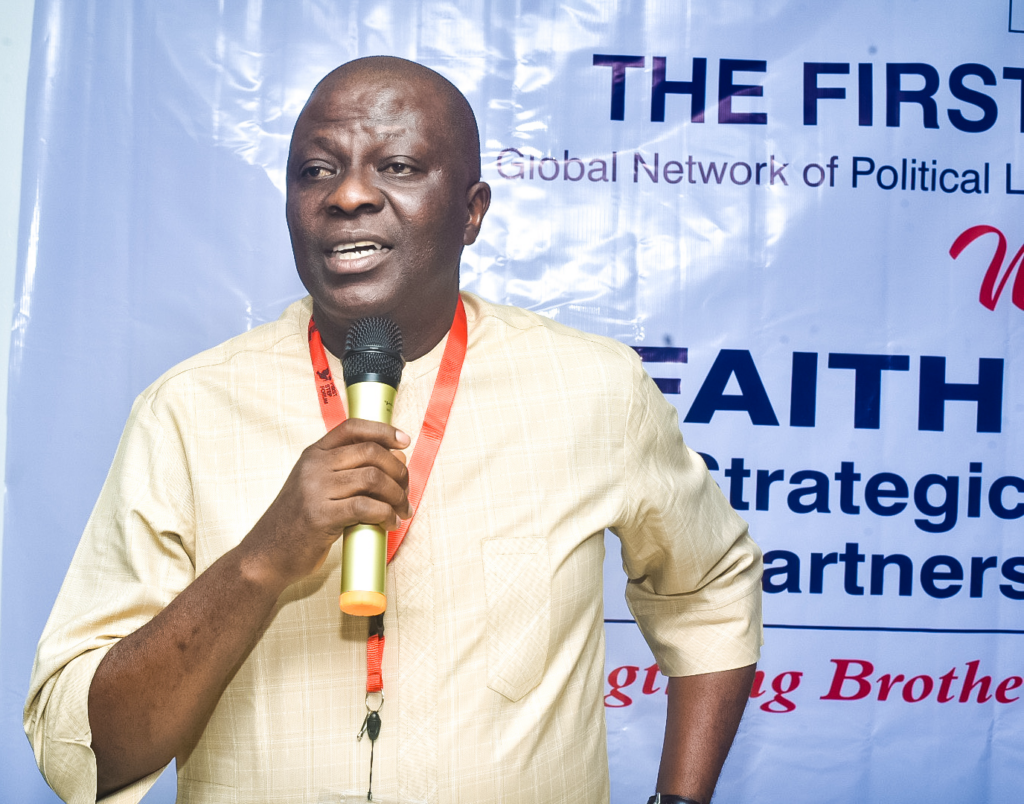
Former Nigerian parliamentarian Dawari George, who served as lead facilitator of the First Step Forum visit and head of the Global Freedom Network–Africa. Photo credit: First Step Forum
The Abuja Declaration makes clear that peace is not a one-time achievement but an ongoing process. The next phase will require translating commitments into action, strengthening interfaith cooperation, improving accountability and investing in community-level solutions.
For George, one of the most encouraging moments came during the interfaith dialogue itself. “The engagement with the faith leaders was touching,” he said. “They kept referring to each other as brothers … even as they made practical suggestions on how to deal with the issues.” At the same time, participants recognized the need to extend these efforts beyond elite circles, acknowledging that lasting peace must take root at the grassroots level.
He also pointed to deeper structural challenges that must be addressed: “Two issues kept coming up: education and poverty and the role they play in fostering violence and religious intolerance. As long as people lack access to education and are poor, they will easily be manipulated … there cannot be a lasting solution without addressing these twin issues.”
What began as a first step has the potential to grow into a sustained partnership supporting Nigeria’s efforts to build a future marked by justice, security and mutual respect. As one participant noted, the significance of the visit lies not only in what was said, but in how it was done, through listening, trust-building and a shared commitment to peace. If sustained, that approach may prove as important as any formal agreement in shaping Nigeria’s path toward lasting stability.
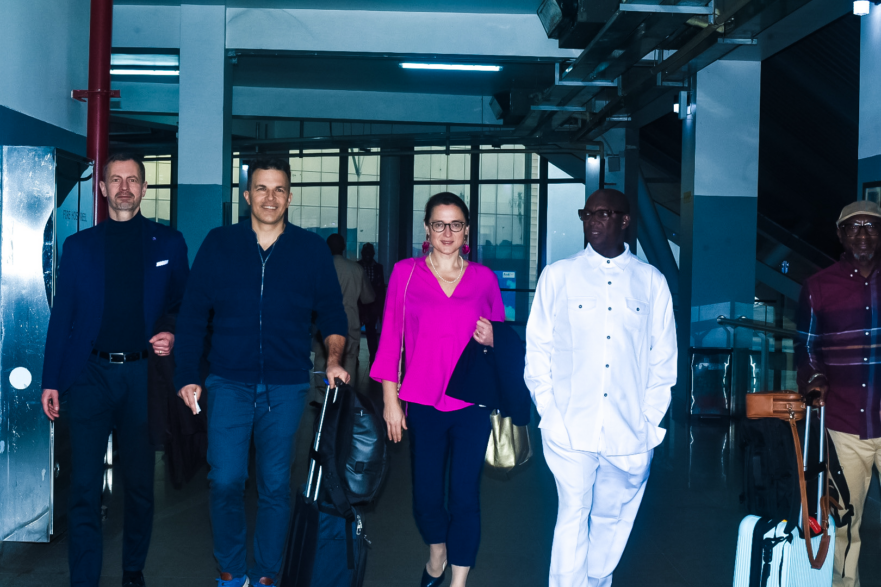
Feature photo: First Step Forum delegation members Eduard Heger, Marc Jost and Gudrun Kugler arrive in Nigeria for their first visit to the country. Photo credit: First Step Forum
March 31, 2026