In Northeast Nigeria, where extremist violence has scarred entire communities and thousands of families still live with the trauma of abduction, displacement, and loss, one woman has become a relentless advocate for those the world too often overlooks.
Gloria Samdi Puldu has spent years standing alongside persecuted women and girls — rescuing survivors, rebuilding lives, and speaking boldly on behalf of those silenced by fear and violence. As founder of the LEAH Foundation (Leadership Empowerment Advocacy and Humanitarian Foundation), Gloria leads efforts that provide trauma healing, discipleship, vocational training, and hope to survivors of terrorism, trafficking, and religious persecution across Northern Nigeria.
But Gloria’s mission did not begin in a conference hall or humanitarian office. It began in childhood.
 Born in Adamawa State in Northeast Nigeria, Gloria grew up in a prominent political family as one of eight daughters. While her family’s position brought opportunity, it also exposed her early to painful realities about gender discrimination and religious marginalization.
“In our culture, girls were often viewed as temporary assets,” she recalls. “Property to be married off rather than individuals with inherent worth and purpose.”
She watched her mother endure pressure to continue bearing children in hopes of producing a son who could become the family heir. Around her, Gloria saw Christian communities denied opportunities and leadership positions, while many women and girls were expected to remain silent, dependent, and unseen.
Those experiences planted something deep within her.
“I saw my mother’s quiet strength,” Gloria says. “And I learned that God sees and values every daughter.”
Even as a child, she found herself defending classmates who were bullied or mistreated. Long before she understood the language of advocacy, she already felt the burden of injustice.
“Deep inside,” she says, “I knew God was preparing me to become a voice for the voiceless.”
That calling only intensified as she grew older and witnessed systemic abuses against women and girls in Northern Nigeria: forced early marriages, denial of education, religious discrimination, trafficking, and extremist violence. Gloria resolved that if she ever had the opportunity, she would fight for those who had been denied dignity and freedom.
Today, that childhood promise has become the work of her life.
The Girl Who Changed Everything
Like many Nigerians, Gloria remembers the 2014 abduction of the Chibok schoolgirls as a defining moment. For years, communities in Northeast Nigeria had suffered brutal attacks from Boko Haram, but much of the world remained silent until the global #BringBackOurGirls movement finally drew international attention.
Then came another tragedy.
 In 2018, terrorists abducted 110 schoolgirls from Dapchi, Nigeria. Most were eventually released. One was not.
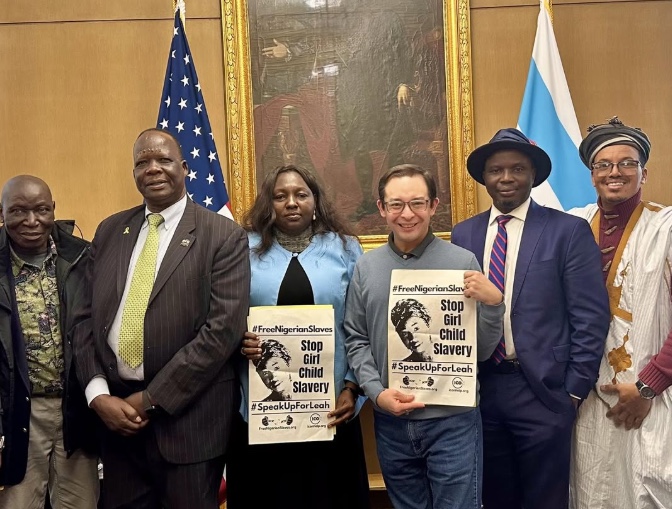
Fourteen-year-old Leah Sharibu remained in captivity after reportedly refusing to renounce her Christian faith.
For Gloria, Leah’s story became deeply personal.
“One night, overwhelmed and crying out to God, I received profound comfort,” Gloria says. “He is sovereign. Nothing happens without His knowledge, and He holds every girl in His hands.”
Soon afterward, a missionary friend encouraged her to begin publicly advocating for Leah’s release. Gloria responded by formally launching the LEAH Foundation — intentionally naming the organization in Leah’s honor.
Leah’s courage transformed Gloria’s life and ministry.
“That single act of bold faith at just fourteen years old has inspired a movement of advocacy,” she says. “Leah’s story taught me that one girl’s bold faith can open doors for thousands.”
Since then, Gloria has spoken internationally about religious persecution, women’s rights, and the plight of Christian communities in Nigeria. Yet while advocacy has opened global doors, her heart remains firmly rooted on the ground with survivors.
From Rescue to Restoration
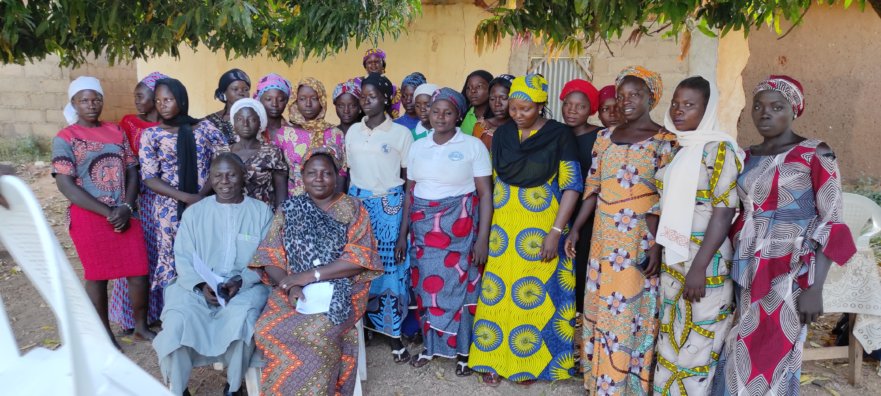
At the LEAH Foundation’s Hope and Freedom Center, survivors of abduction, sexual violence, trafficking, and terrorism begin the long journey toward healing.
The needs are immense.
Many of the young women arriving at the center have endured years of captivity, repeated rape, forced conversion, forced marriage, and the murder of loved ones. Some return carrying children conceived through violence. Others arrive with no surviving family at all.
“One of the greatest emotional hurdles is forgiveness,” Gloria explains. “At first, the pain is so deep that the very idea of forgiving their perpetrators feels impossible.”
Trust is another challenge. Survivors have often been betrayed by neighbors, community members, militants, or even authorities who failed to protect them.
“When they first arrive, most are deeply suspicious and withdrawn,” Gloria says. “Opening up about their pain takes time.”
The stigma survivors face after returning home can be equally devastating. Women and girls are frequently labeled “Boko Haram wives,” despite having been kidnapped against their will. Families sometimes reject them entirely — especially if they return with children born during captivity.
“This rejection leaves many girls with nowhere to go,” Gloria says, “pushing them back into the streets or brothels simply to survive.”
The LEAH Foundation responds with long-term, holistic care. Survivors receive trauma counseling, Bible study and discipleship, shelter, education support, and vocational training in skills such as sewing, hairdressing, catering, and beading. The organization also provides startup assistance so women can build independent lives.
For Gloria, economic empowerment is not secondary to healing. It is part of healing itself.
“Economic independence restores dignity,” she says. “A skill plus startup support means a survivor can feed her children, pay rent, and stand tall. It moves her from victim to provider and leader.”
She has seen transformation happen again and again.
One young woman named Mercy arrived after unimaginable suffering. Boko Haram had killed both of her parents, leaving her alone and vulnerable. Eventually, she turned to prostitution simply to survive.
Mission partners later rescued her from a camp in Borno State, where even some security personnel were exploiting vulnerable women.
At the Hope and Freedom Center, Mercy received trauma counseling, discipleship, and vocational training. Slowly, healing began.
Today, she is fully employed, financially independent, and helping other broken girls rebuild their lives.
“She tells them with conviction, ‘Come and lay your pain at the foot of the cross,’” Gloria says.
Stories like Mercy’s sustain Gloria through difficult seasons.
“If the Lord can redeem a life as shattered as Mercy’s so completely,” she says, “I am confident He can also bring Leah Sharibu home.”
An Often Overlooked Crisis
Gloria believes the suffering of Christian women and girls in Nigeria remains dangerously underreported.
“Women and girls experience persecution in deeply gendered ways,” she explains. “Through sexual violence, forced conversion and marriage, trafficking for sexual slavery, and the destruction of their roles as mothers and nurturers.”
Yet many of these crimes happen far from cameras and headlines.
Girls are abducted and forcibly converted by neighbors or acquaintances. Some disappear into marriages arranged against their will. Others are trafficked across borders into Niger or Chad and used as sex slaves by extremist groups such as Boko Haram and ISWAP.
“These stories rarely make international news,” Gloria argues. “Yet these abuses amount to a systematic attack on Christian women and girls.”
She believes global attention often focuses elsewhere while violence against Christians in Nigeria receives limited sustained coverage.
“These are not abstract statistics,” she says. “They are daughters, sisters, and mothers whose bodies, futures, and faith are weaponized.”
 Through her advocacy, Gloria continues pressing global leaders, churches, and policymakers to recognize the human cost of religious persecution in Nigeria and to act with urgency and compassion.
Carrying the Weight
The work has not come without personal cost.
After years of hearing survivors recount horrific trauma, Gloria herself has experienced secondary trauma.
“There are nights I cannot sleep because the stories replay in my mind,” she admits.
She is currently seeking support from a Christian psychologist and intentionally planning periods of rest and renewal. Prayer, Scripture, and fellowship with other believers remain essential to sustaining her emotionally and spiritually.
“I remind myself that I am not the Savior — Jesus is,” she says. “My role is to be obedient and faithful.”
Despite the exhaustion, Gloria continues because she believes hope is stronger than terror.
One story remains especially meaningful to her: a woman who had spent more than thirty years trapped in prostitution, moving from brothel to brothel, believing restoration was impossible. After encountering the Gospel through the LEAH Foundation, the woman entered the Hope and Freedom Center and began rebuilding her life.
A year later, she was reunited with her elderly parents, who had long believed she was dead.
“The tears, the hugs, and the worship that day encapsulated everything we do,” Gloria says. “God specializes in impossible restorations.”
A Different Future for Africa’s Girls
Looking ahead, Gloria dreams of expanding the LEAH Foundation’s reach across Nigeria and beyond, helping thousands more survivors find healing and hope.
But her vision is larger than one organization.
She wants to see a generation of educated, confident, faith-filled African women leaders rise up and transform their communities.
“My deepest hope,” she says, “is that every girl child receives quality education and grows into a leader who breaks cycles of violence and builds communities of peace and justice.”
When asked what courage means to her today, Gloria immediately returns to the image of a fourteen-year-old girl who refused to deny her faith.
“Courage,” she says, “is choosing to stand for truth and love even when it costs everything.”
It is also the survivor who forgives her captors. The mother who escapes violence and dares to hope again. The advocate who continues carrying painful stories while refusing to surrender to despair.
“My hope remains firm,” Gloria says. “The Lord will deliver the Nigerian girl, woman, and man. Captivity is not stronger than the resurrection power of Jesus Christ.”
And until that day comes, she will keep fighting for the forgotten.
About Gloria Samdi-Puldu: Dr. Gloria Samdi-Puldu is the global director of Give Her Voice and president of the LEAH Foundation. She holds a doctorate in Political Science from the University of Ibadan, as well as graduate and undergraduate degrees in International Relations, Strategic Studies, and Political Science from the University of Jos. An educator, researcher, and advocate for persecuted and vulnerable women and girls across Africa, she also co-authored the book Hero for Jesus with Peter Fretheim.