By Alexia Kollar
My Internship with 21Wilberforce
The summer of 2025 did not look like a highlight reel from a coming-of-age movie. I did not backpack through Europe, rescue anyone in dramatic fashion, or stumble into a wildly successful side hustle. Instead, I spent my summer behind a laptop—reading reports, joining video calls across time zones, and grappling with questions of justice, faith, and human dignity. Yet this season proved to be far more formative than any romanticized alternative I could imagine.
As a Summer Associate with 21Wilberforce, I stepped into a world that challenged me intellectually, stretched me personally, and clarified my sense of calling. What began as a desire to gain professional experience quickly became a season of deep growth—rooted in advocacy, faith, and the pursuit of freedom for others.
Drawn to the Mission
Founded in 2014, 21Wilberforce is a faith-based human rights organization committed to equipping people of faith—particularly churches and Christian leaders—to stand for freedom of religion or belief (FoRB) around the world. Inspired by the legacy of British parliamentarian William Wilberforce, the organization engages in grassroots mobilization and policy advocacy to protect the fundamental right to believe, practice, or change one’s religion without fear or coercion.
Long before I applied for this internship, the mission of 21Wilberforce had already captured my attention. While working at Dallas Baptist University’s Cook School of Leadership, I was introduced to the concept of religious freedom through conversations with Dr. Randel Everett, founder of 21Wilberforce. Those early interactions sparked something new in me. I began to see that faith and advocacy were not separate callings, but deeply connected ones—that protecting human dignity could itself be an expression of the Gospel.
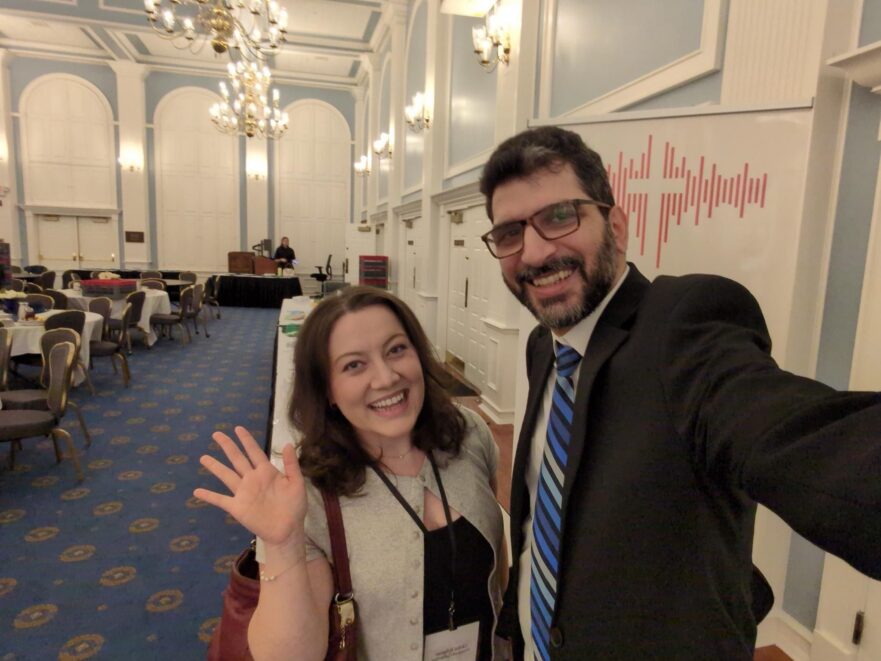
That curiosity deepened during DBU’s “Pray for the Persecuted” conference, where I eagerly volunteered and soaked in conversations about faith under pressure. It was there that I briefly met Wissam al-Saliby, 21Wilberforce’s newly appointed president. Our exchange was simple—coffee, questions, introductions—but it left a lasting impression.
Months later, when it came time to apply for internships, I explored several options. Still, my heart was set on 21Wilberforce. Despite having little formal experience in human rights research or advocacy, I felt compelled to step into unfamiliar territory. It was a risk—but one I believed was worth taking.
Learning Through Discomfort
Like many interns, I arrived with excitement mixed with self-doubt. I expected to be challenged, but I did not anticipate that the greatest growth would come from confronting my own weaknesses.
I am naturally relational and people oriented. I thrive in collaboration, conversation, and diplomacy. Analytical research, dense reports, and methodological thinking, however, felt far outside my comfort zone. Yet these very skills formed the backbone of my summer work.
Much of my time was spent assisting with preparations for an upcoming consultation with Nigerian partners in Lagos and Abuja. My role involved compiling and analyzing more than a dozen human rights reports to identify trends, gaps, and methodologies that local churches and ministries could build upon. The goal was to empower local advocacy—equipping partners to engage their own government without relying heavily on Western intervention.
At first, the work felt overwhelming. The reports varied widely in length and clarity. The language was technical. Much of the terminology was unfamiliar. But over time, persistence began to bear fruit. What once felt inaccessible slowly became understandable. Confidence grew—not because the work became easy, but because effort produced competence.
I began to realize that avoiding my weaknesses had only limited my growth. Like exercising an underused muscle, the discomfort was necessary. I did not master research by the end of the summer, but I grew stronger than when I started—and that mattered.
A Global Team, A Shared Vision
Although my internship was entirely remote, it was deeply relational. The 21Wilberforce team spans continents: President Wissam al-Saliby in Houston, Advocacy and Training Coordinator Trent Martin in Thailand, and Communications Director Lou Ann Sabatier in Virginia. Our weekly video calls became a rhythm of connection, alignment, and shared problem-solving.
During these meetings, I was encouraged to contribute ideas, share progress, and ask questions. Just as valuable as the tasks themselves was the opportunity to observe how experienced leaders navigate complex issues with wisdom, humility, and collaboration.
Each team member shaped my experience in meaningful ways. Wissam offered thoughtful guidance and a deep understanding of global religious freedom. Trent modeled patience and generosity as a mentor, skillfully balancing many responsibilities while investing in my growth. Lou Ann, with decades of leadership experience, embodied vision and resolve—constantly reminding me that, with the Lord, it is possible to aim high and persevere.
Despite the physical distance, the team cultivated trust and respect. I was reminded that meaningful work and authentic relationships can flourish—even through a screen.
Advocacy in Practice
In addition to research, I worked on developing a training presentation to help equip local partners in documenting and reporting human rights violations. The goal was to create a practical, accessible “crash course” that could be used not only in Nigeria, but in future consultations as well.
Interestingly, the process mirrored my own learning. As I built the training, I was also being trained—gaining literacy in advocacy tools, documentation standards, and long-term strategy.
I was also invited to observe calls with other organizations in the FoRB space, including an International Religious Freedom Congressional Working Group. These moments broadened my perspective and, at times, challenged my assumptions. Sitting alongside people of vastly different beliefs—united by a shared commitment to freedom—forced me to confront my own biases and embrace a more expansive understanding of compassion.
One particularly meaningful moment came during a call with our Nigerian partners. As I took meeting notes, I was struck by the reality behind the work. The names, emails, and plans represented real people, real communities, and real lives. The data was no longer abstract. Each statistic carried weight. Each story mattered.
A Summer That Lasts
As my internship came to a close, it became clear that its impact would extend far beyond one season. Through research, collaboration, and reflection, I gained not only new skills, but a deeper sense of purpose.
I learned that advocacy can be an act of faith. That weakness, when exercised, can become strength. And that serving others—especially those whose freedoms are under threat—is both a privilege and a calling.
The summer of 2025 may not have looked extraordinary from the outside. But within it, something lasting took shape—a quiet transformation shaped by challenge, trust, and a shared commitment to defending the dignity of every person.
For that, I am profoundly grateful.
Photo caption: Alexia Kollar and 21Wilberforce President, Wissam al-Saliby, at the CAPP/DBU religious freedom conference.
Photo credit: Alexia Kollar