
By Trenton Martin, Advocacy and Training Coordinator, 21Wilberforce
This article is based on remarks presented at the Christian Conference of Asia Consultation on Myanmar in November 2025.
The Myanmar military coup of February 1, 2021 rekindled a conflict that has since engulfed the country. Five years later, the conflict still rages in the streets and jungles of Myanmar, yet the country’s faith communities are working to mend the wounds of a nation scarred by war. While Christians are a religious minority, many of Myanmar’s Christian communities are bringing aid to victims of violence and working to overcome the country’s deep divisions. Building on their example, Christian traditions of peacebuilding can impact Myanmar’s multi-religious society and help create a just peace for the country.
Jesus as the Prince of Peace
At the heart of the Christian faith is the belief that God restores broken relationships. People dishonored God by twisting the purpose He gave humanity, to love God and others, into a pursuit of selfish desires. This diversion from God’s plan broke humanity’s relationship with Him and led to conflict between people. Lies, hatred, and war flow from the foundation of our selfish souls separated from God. We seek to dominate rather than serve, which puts us at war with both God and one another.
Jesus, called the Prince of Peace in Scripture, entered this broken world as a peacemaker. He came to bridge the gap between God and humanity. He modeled a perfect life of peace with God and others, took the punishment we deserved by dying on a cross, and offers new life through His resurrection, which conquered death.
Peacebuilding, therefore, is not optional for Christians. It flows directly from the character of God and His creation of each person in His image. Jesus modeled this peacemaking in His life. In the Sermon on the Mount, He calls His followers to break cycles of dominance and revenge. For example, He teaches, “If anyone forces you to go one mile, go with them two miles” (Matthew 5:41, ESV). Roman soldiers, the oppressors of Jesus’ Jewish society, were allowed to force people to carry their packs for one mile. Jesus tells His followers to turn this oppressive practice into an opportunity to affirm the dignity of both the oppressed and the oppressor by willingly going the extra mile.
While authorities may sometimes have the responsibility to bring justice and protect the people they serve with “the sword” (Romans 13), violence alone leads to more violence. Jesus’ example reveals God’s heart for reconciliation and challenges us to implement this radical love that overcomes the roots of conflict.
Christian hope affirms that ultimate peace will come through God’s future restoration. Yet this hope does not excuse passivity. We cannot create heaven on earth, but God can bring glimpses of that future peace into our lives and societies now, praying, as Jesus did, that “your will be done on earth as it is in heaven” (Matthew 6:10).
The Just Peace Tradition and Its Relevance for Myanmar
A peacebuilding tradition that reflects many of these Christian beliefs is the just peace tradition. Just peace is not merely the absence of conflict but the presence of justice, dignity, and restored relationships.
Early Christians lived under the brutal Roman Empire, yet their faith spread not through power but through compassion. They cared for plague victims abandoned by others, welcomed unwanted infants, and supported widows and orphans. This love gradually reshaped society from the ground up.
This can be a powerful parallel for Myanmar today. When people care for the vulnerable, they resist brutality without mirroring it. They reveal an alternative vision of what society can become. Myanmar Christians have embodied this peace through trauma healing, forgiveness initiatives, and compassionate service to displaced and marginalized communities. These acts are not small or secondary; they are signs of the peace of Jesus breaking into places of brokenness.
At a broader societal level, the church also carries a responsibility to promote a just peace. Within Myanmar, this voice is often constrained by repression. Yet there are ways to advance justice and dignity at local levels through quiet, relational diplomacy. International partners, in close coordination with those on the ground, can support and amplify these voices, ensuring suffering is neither hidden nor forgotten.
Faith-Based Peacebuilding for Myanmar’s Future
Religion as a Source of Unity, Not Division
Religion has too often been used to divide Myanmar’s people. Some narratives of Buddhist supremacy have been used to justify military atrocities against majority Christian or Muslim ethnic groups. Fears that Christians might exclude other religious groups from leadership have also undermined unity within some ethnic areas.
Yet Myanmar’s religious traditions, including Buddhist, Christian, Muslim, and animist communities, share commitments to the value and dignity of life. These shared values offer powerful opportunities for solidarity. Brave pastors and monks have spoken out, when possible, for justice. Religious leaders often carry moral authority that extends beyond political institutions. Christians should use this time as an opportunity to share and live out the hope and peace that Jesus calls all people to.
Multi-faith dialogues and peace events can be important starting points, but they must lead to joint action rather than remain symbolic. When people of one faith suffer injustice, people of other faiths should stand with them. Like the Good Samaritan in Jesus’ parable, they are called not to pass by suffering but to respond with compassion and courage. This is not only a moral obligation but a necessary path to survival. If we fail to defend the God-given dignity of others, we risk becoming like Martin Niemöller, the German pastor who remained silent under Nazi tyranny until he said, “Then they came for me—and there was no one left to speak for me.”
Equipping Local Leaders for Peacebuilding
Local religious leaders are often first responders in times of crisis, helping to defuse or respond to conflict. Practical training can strengthen their capacity as peacebuilders, including skills in conflict mediation, nonviolent communication, community organizing, restorative justice, and basic legal frameworks. Religious leaders often have unique opportunities to serve as trusted conveners and mediators between groups that might otherwise never sit at the same table.
Relational, Humanitarian and Trauma Support
Peacebuilding must address not only structures of injustice but also wounded hearts and minds. Christians should build relationships that support and care for marginalized communities. They should share the hope of Jesus through both words and action. Myanmar churches work with ethnic administrations as central avenues of humanitarian aid and educational programs in many conflict affected areas where most other aid organizations are not able to access.
Trauma, especially when unacknowledged, can perpetuate cycles of violence. Faith communities can offer trauma-healing workshops facilitated by trained practitioners and create safe listening spaces where people can share experiences without fear. Personal healing strengthens the foundations of communal peace.
Multi-Faith Coalitions for Just Peace
There is significant opportunity for multi-faith coalitions to bridge ethnic and religious divides. Such cooperation does not require theological agreement; it requires a shared commitment to the urgent goal of a just peace for Myanmar. An example of this is found in the efforts of some opposition groups who are working to be inclusive of traditionally excluded minority religious groups in leadership positions.
Effective coalitions are inclusive, focused, and principled. They bring broad representation, exclude actors who actively undermine religious freedom, and unite around concrete objectives. Faith leaders can convene discussions on protecting freedom of religion or belief, sharing governance lessons across regions, and engaging constructively with relevant actors.
Conclusion
Faith-based peacebuilding must do more than comfort victims, it must challenge injustice itself. The German pastor and theologian Dietrich Bonhoeffer wrote, “We are not to simply bandage the wounds of victims beneath the wheels of injustice; we are to drive a spoke into the wheel itself.” This conviction calls Christians and other faith communities to courage, creativity, and solidarity.
Faith can be a force for healing, not division. Working side by side, Buddhists, Christians, Muslims, animists, and all people of goodwill can move toward a Myanmar where justice and peace are no longer distant hopes.
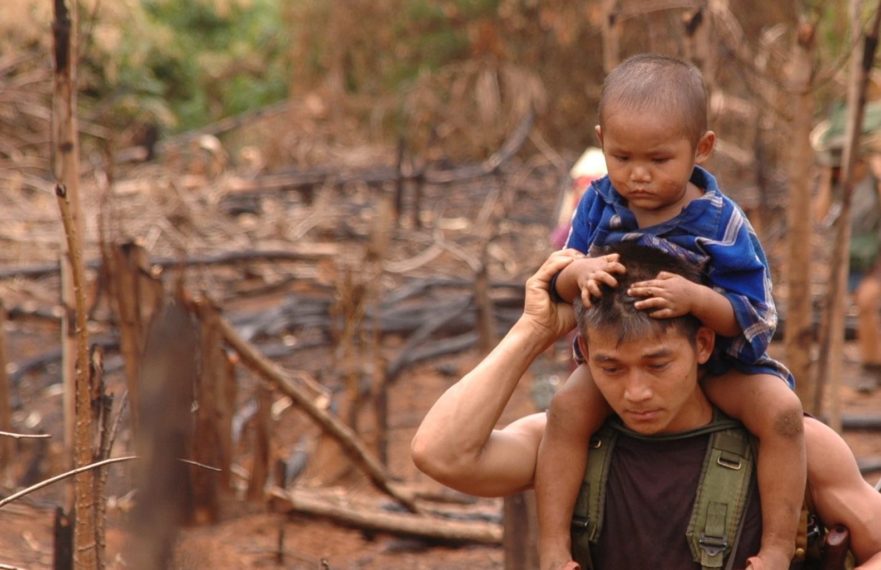
Photo credit: Free Burma Rangers
February 9, 2026